Cotton vs Poly-Cotton vs Polyester for Streetwear: How to Choose?
A technical buyer guide comparing 100% cotton, CVC blends, and polyester for custom hoodies, t-shirts, and tracksuits
In streetwear and custom menswear product development, fabric composition dictates everything: garment hand-feel, silhouette drape, wash durability, decoration compatibility, and final retail price.
When brand founders and sourcing managers build tech packs for hoodies, graphic tees, sweatpants, and tracksuit sets, the foundational decision is choosing between 100% Combed Cotton, Polyester/Cotton Blends (CVC or TC), and 100% Performance Polyester.
While fashion purists often demand “100% cotton everything,” experienced apparel manufacturers know that each composition solves a different technical problem. A 100% cotton fleece provides unmatched breathability, a matte luxury drape, and superior dye absorption for vintage washes, but it is naturally prone to shrinkage and wrinkling. A premium Chief Value Cotton (CVC 80/20) blend dramatically improves shape retention, prevents post-wash pilling, and holds loft in heavy winter hoodies. Meanwhile, engineered polyester remains the standard for lightweight windbreakers, matching tracksuits, and athletic sports sets.
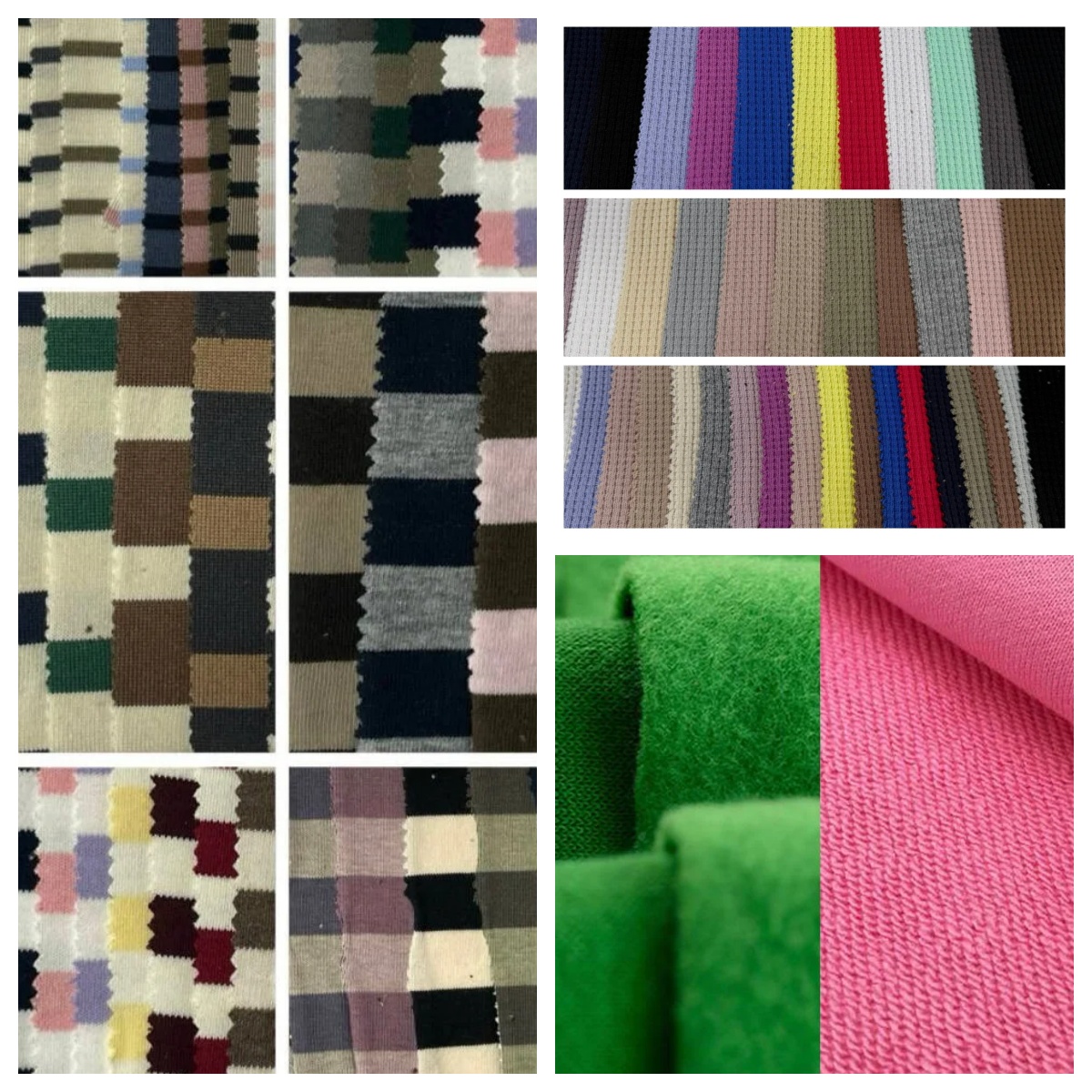
Bayeeclothing manufactures custom streetwear across 100% cotton, poly/cotton, 100% polyester, spandex/cotton, and wool/nylon blends, supporting brand programs from 30 pieces per design with 3–5 day sample development. This guide breaks down the performance, cost, and printing differences to help buyers choose the ideal fabric composition for their collection.
1. Quick technical comparison: The three core fabric compositions
| Performance Metric | 100% Combed Cotton | CVC Poly-Cotton (80/20 or 70/30) | 100% Polyester / Poly-Spandex |
| Hand-feel & texture | Natural, dry-soft, premium matte finish | Soft fleece interior, smooth face yarn | Silky, slick, technical, or brushed athletic hand |
| Breathability & moisture | High natural breathability; absorbs sweat | Balanced breathability and moisture control | Moisture-wicking; hydrophobic (does not absorb water) |
| Shrinkage tolerance | 3–6% natural shrinkage (requires pre-shrinking) | High stability (under 2–3% post-wash shrinkage) | Virtually zero shrinkage; heat-resistant dimensions |
| Wrinkle & crease resistance | Low; creases easily without ironing | Moderate to high; naturally recovers shape | High; wrinkle-free and quick-drying |
| Puff print & screen print | Best anchor; ink absorbs deeply into fibres | Excellent; smooth face supports high-definition print | Requires low-bleed inks to prevent dye migration |
| Acid wash & vintage dyeing | Excellent; absorbs pigments and enzymes evenly | Good, but polyester core fibres resist bleaching | Poor; synthetic fibres do not react to standard wash enzymes |
| Target menswear categories | Heavyweight graphic tees, vintage wash hoodies, luxury sweatpants | Core commercial hoodies, fleece joggers, crewnecks | Matching tracksuits, windbreakers, training shorts, athletic sets |
2. 100% Combed Cotton: The luxury streetwear standard Why streetwear buyers choose it
100% cotton (especially ring-spun combed cotton) is the non-negotiable benchmark for high-end graphic tees, heavy oversized hoodies (380–500 GSM), and vintage-washed capsules.
Key advantages
Superior Hand-Feel & Breathability:
- ● Natural cellulose fibres provide unmatched skin comfort and airflow, preventing the clammy feel associated with cheap synthetics.
Flawless Dye & Wash Performance:
- ● 100% cotton absorbs pigment dyes, reactive dyes, acid washes, and stonewashing uniformly, producing authentic high-low vintage seam fading.
Clean Printing Surface:
- ● Takes water-based inks, high-density plastisol, discharge printing, and puff print without surface melting or ink flaking.
Sourcing considerations for buyers
Cotton has natural fibre elasticity limits. To prevent shape distortion, buyers should specify pre-shrunk treatments, combed yarn (21s, 16s, or 12s), and heavy ribbing blended with 3–5% spandex at the cuffs and hem to prevent collar and waistband sagging.
3. Poly-Cotton Blends (CVC 80/20 & TC 65/35): The durability workhorse
What CVC and TC mean
CVC (Chief Value Cotton):
- ● Fabric composed of more than 50% cotton (typically 80% cotton / 20% polyester or 70/30). The cotton dominates the outer surface and hand-feel, while polyester fibres reinforce the interior knit.
-
TC (Tetron Cotton):
- ●Fabric composed of more than 50% polyester (typically 65% polyester / 35% cotton). More cost-effective, but has a more synthetic hand-feel.
Key advantages
Exceptional Dimensional Stability:
- ● The polyester core prevents the hoodie from shrinking lengthwise or twisting at the side seams after domestic machine washing.
Interior Fleece Loft:
- ● In brushed fleece hoodies, polyester adds resilient loft and fluffiness that does not flatten out after repeated laundering.
Anti-Pilling & Abrasion Resistance:
- ● Poly-cotton blends withstand surface friction better than untreated cotton, extending garment life for everyday loungewear and commercial merchandising drops.
Best used for
High-volume private label collections, commercial lifestyle drops, everyday crewnecks, and fleece joggers where structural consistency across thousands of units is critical.
4. 100% Polyester: The technical streetwear and sportswear essential
Why modern streetwear uses polyester
While polyester is avoided for classic oversized graphic tees, engineered polyester is essential for tracksuits, coach jackets, nylon-feel windbreakers, cargo pants, and technical sports sets.
Key advantages
Moisture-Wicking & Rapid Drying:
- ● Hydrophobic fibres pull sweat away from the skin and dry in minutes, making it ideal for performance activewear.
- Lightweight Strength:
- ● Polyester microfibre and ripstop weaves offer exceptional tear strength at very low fabric weights (120–220 GSM).
Sublimation & Allover Printing:
- ● Polyester accepts all-over dye sublimation printing, enabling full-coverage photo prints and gradient patterns that cannot be achieved on cotton.
Best used for
Matching retro tracksuits, soccer-inspired streetwear jerseys, running shorts, windbreaker pullovers, and water-repellent outerwear.

5. Decoration and washing compatibility matrix
| Technique | 100% Cotton | Poly-Cotton (80/20 CVC) | 100% Polyester |
| Screen Print (Plastisol / Water-Based) | Ideal for both ink types | Ideal; use low-bleed ink for bright white | Requires anti-bleeding blocker ink |
| High-Density Puff Print | Exceptional; holds 3D foam shape | Excellent; clean expansion | Possible with low-temperature cure ink |
| 3D & Towel Embroidery | Holds dense needle penetrations | Excellent; stable backing | Requires backing stabilizer on light weaves |
| Acid Wash & Stonewash | Produces deep, authentic vintage fade | Subtle vintage look; poly threads stay base colour | Incompatible (bleach/enzymes do not react) |
| Rhinestones & Heat Transfers | Strong heat-press adhesion | Strong adhesion | Requires lower heat to prevent fabric glazing |
| Dye Sublimation (All-Over Print) | Incompatible (sublimation requires poly) | Weak / vintage-faded print | Ideal; vibrant, permanent full-coverage prints |
6. Sourcing custom fabrics with Bayeeclothing
Choosing the right composition requires matching yarn weights, knit density, and finishing treatments to your target price point.
At Bayeeclothing:
Comprehensive Fabric Library:
- ● We stock and develop 100% combed cotton, 80/20 CVC, 100% polyester, spandex/cotton ribbing, and wool/nylon blends.
Sustainable GRS Certification:
- ● For eco-conscious European and North American brands, we offer
GRS-certified recycled cotton and recycled polyester fabric options
.
Low-MOQ Flexibility:
- ● Start your collection from
30 pieces per design
, testing custom 100% cotton heavyweights and technical poly tracksuits without committing to massive mill dye lots.
Rapid Prototyping:
- ● Complete proto-sampling in
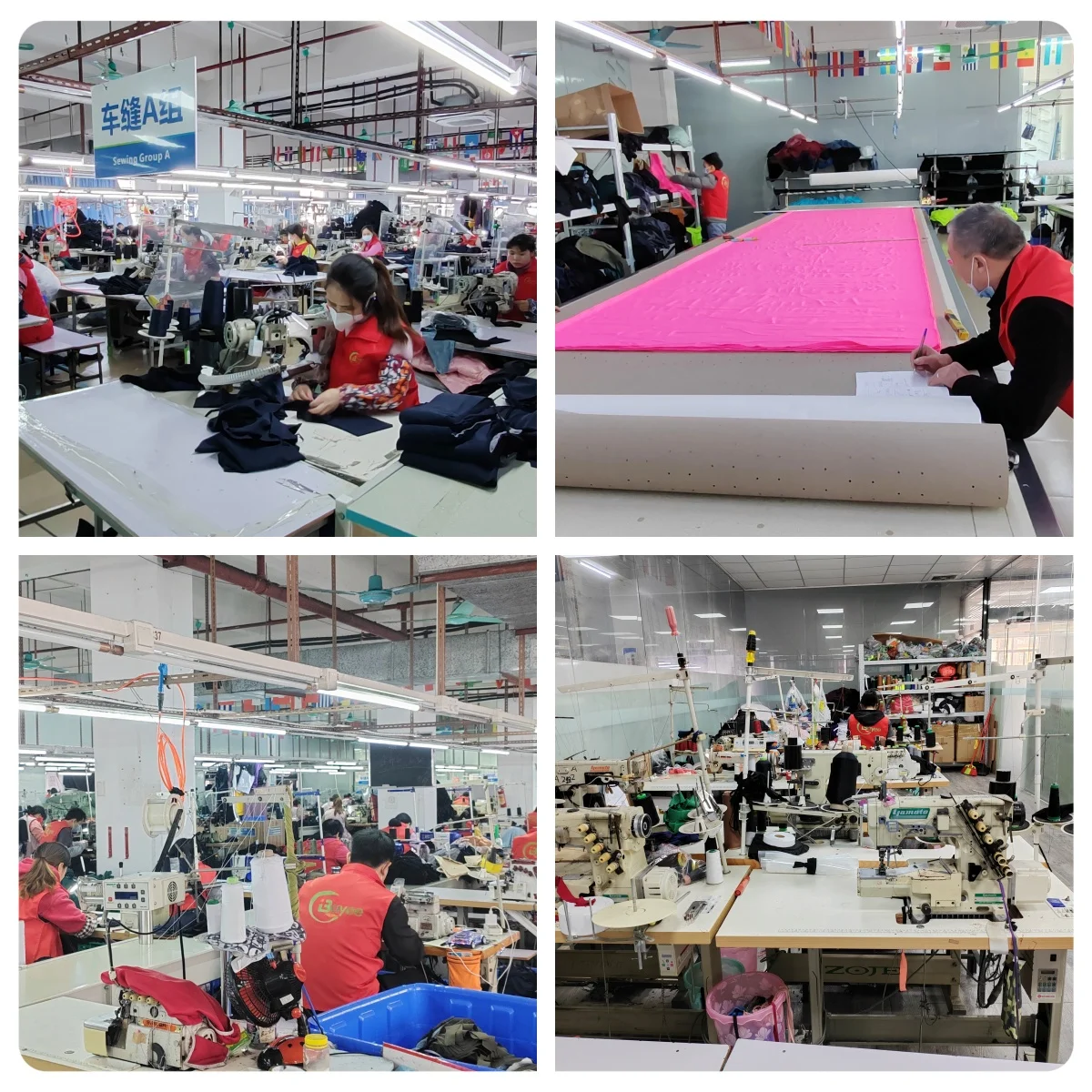
3–5 days, backed by our 7 senior pattern designers (20+ years experience) and our 3,000 m² Dongguan facility with 7 dedicated lines and 3 QC inspection lines
(monthly capacity 60,000+ pieces).
FAQ: Streetwear fabric questions buyers ask most
1. Which fabric is best for an oversized streetwear hoodie?
For luxury streetwear, 100% combed cotton (380–500 GSM) is the industry benchmark for hand-feel, heavy drape, and vintage washing. For commercial DTC brands seeking shape retention and minimal shrinkage, an 80/20 CVC poly-cotton blend provides the ideal balance of softness and stability.
2. What is CVC fabric, and why is it popular for hoodies?
CVC stands for Chief Value Cotton, meaning a blend containing over 50% cotton (typically 80% cotton / 20% polyester). It is popular because it retains the soft, natural feel of
cotton while utilizing polyester’s strength to prevent shrinkage and keep the interior fleece fluffy.
3. Does 100% cotton shrink more than poly-cotton?
Yes. Natural cotton fibres contract when exposed to heat and moisture, typically shrinking 3–7% if untreated. Poly-cotton blends shrink significantly less (usually under 2–3%) because polyester fibres are thermally stable. Bayeeclothing pre-shrinks cotton fabrics to keep residual shrinkage within commercial standards (±3%).
4. Can you do vintage acid wash on polyester fabrics?
No. Acid wash and enzyme stonewashing rely on chemical reactions with natural cellulose fibres. Because polyester is a synthetic plastic polymer, it does not bleach or abrade with standard wash chemicals. Vintage wash drops should always be specified in 100% cotton.
5. What fabric composition should I choose for custom matching tracksuits?
Matching tracksuits and sports sets are best manufactured in 100% polyester (interlock or microfibre), polyester/spandex blends, or lightweight loop-back French terry. These fabrics offer flexibility, wrinkle resistance, and moisture control.
6. Can I order custom fabrics with a 30-piece MOQ at Bayeeclothing?
Yes. Bayeeclothing supports custom cut-and-sew apparel programs starting from 30 pieces, utilizing our extensive inventory of in-stock premium cotton, CVC, and technical poly fabrics.
7. Does puff print work better on 100% cotton or poly-cotton?
Puff print performs exceptionally well on both 100% cotton and high-cotton CVC blends. On 100% polyester, special low-bleed barrier inks must be used during curing to prevent garment dye from migrating into the puff graphic.
8. What is the difference between French Terry and Fleece?
French Terry has flat, unbrushed loops on the interior, offering breathability and 3-season wear. Fleece is brushed on the inside to create a fuzzy, insulating nap that traps heat for winter warmth.
9. Does Bayeeclothing offer eco-friendly and recycled fabrics?
Yes. We offer GRS-certified recycled cotton, recycled polyester, and organic cotton options that meet EU and US environmental and social compliance regulations.
10. How long does fabric sampling take at Bayeeclothing?
Sample development takes 3–5 days once your tech pack, fabric selection, size breakdown (S–5XL), and artwork are confirmed. Sample fees are quoted according to design complexity.
Buyer checklist before approving a fabric specification
Before signing off on your garment tech pack, verify these 8 fabric criteria:
1. Target fibre composition confirmed (e.g., 100% Combed Cotton, 80/20 CVC, or 100% Poly).
2. Fabric structure specified (Single Jersey, French Terry, Brushed Fleece, or Interlock).
3. Target GSM agreed with manufacturer tolerance (e.g., 400 GSM ± 10g).
4. Dye and wash method matched to fibre (Reactive piece dye, Pigment dye, or Acid wash).
5. Collar/cuff ribbing composition verified (Cotton/Spandex ribbing for neck recovery).
6. Shrinkage control standard defined (Pre-shrunk tolerance under ±3%).
7. Decoration method compatibility checked against fibre heat-cure thresholds.
8. Eco-compliance certifications confirmed if marketing sustainability (e.g., GRS / OEKO-TEX).
Ready to select the perfect fabric for your next drop? Send your tech pack, target hand-feel, and quantity requirements to Bayeeclothing for fabric swatches, quotations, and 3–5 day sample turnaround.
Post time: Sep-24-2026


