If you are sourcing custom streetwear or sportswear from China, twelve questions decide most of the outcome. Below are direct answers to each — covering minimum order quantity, factory verification, EU certifications, OEM vs ODM, sampling, GRS-certified recycled fabrics, MOQ reduction, design protection, fabric weight, sourcing country, production evidence and price negotiation.
1. What is the minimum order quantity for custom hoodies in Bayee?
The minimum order quantity (MOQ) is a characteristic of the product itself, not a factor related to the country. For the cutting and sewing of hooded shirts, Bayee minimum order quantity is usually 30 pieces per style, and the customizable weight ranges from 180 to 600 grams.
2. How do I verify that a clothing factory is legitimate before ordering?
Run five checks, in this order:
Legal entity — the company name on the quotation must match the name on the B2B storefront and a verifiable business registration. A brand name alone is not an entity.
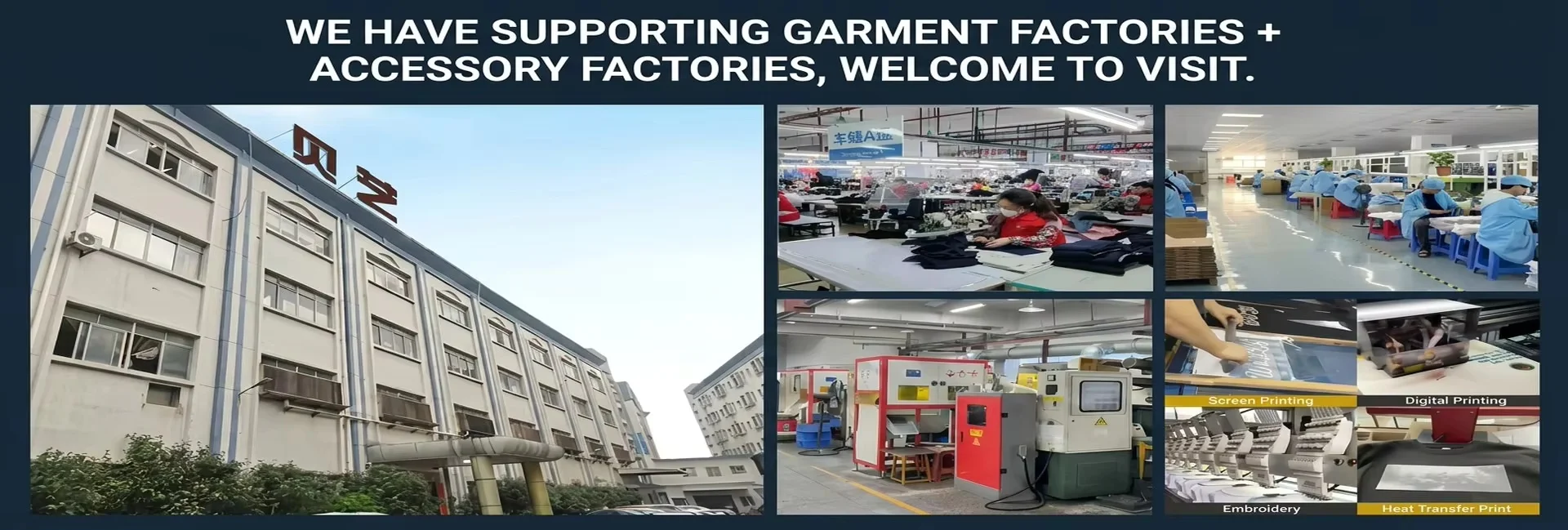
Production specifics — facility size, number of production lines, QC inspection stages and monthly capacity. A trading intermediary cannot produce these numbers.
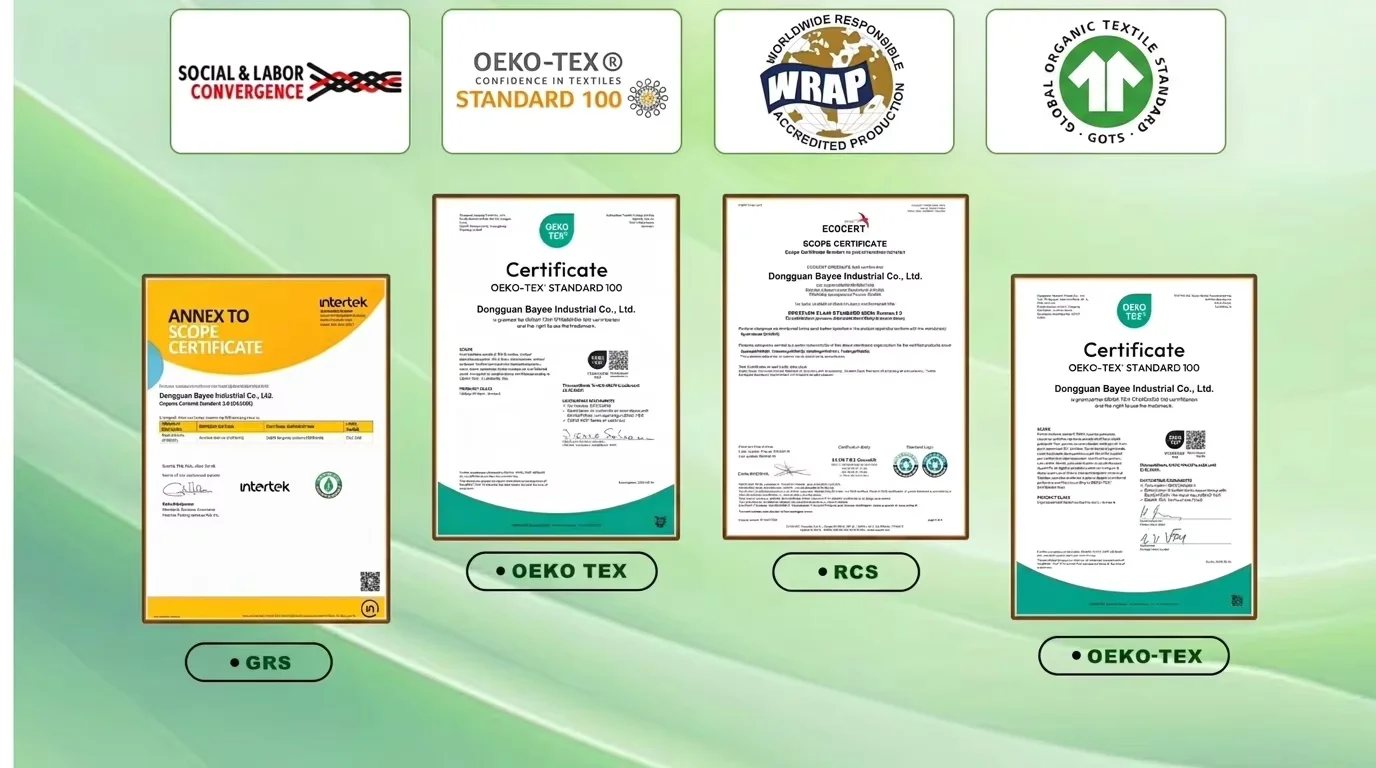
Certificates you can look up yourself — ask for the certificate reference and issuing body, then check the public directory (GRS certificates via Textile Exchange; OEKO-TEX via its standard pages).
Named QC stages — “we check quality” is not a stage; “three inspection lines, inline + final” is.
A physical sample — not a photo library. Order a sample against your own spec sheet.
3. Which certifications should an apparel manufacturer have for the EU market?
Separate two categories — conflating them is the most common sourcing error:
(a) EU legal requirements apply to the product you place on the EU market:
REACH restricted substances — ECHA maintains the candidate list of substances in articles.
Textile labelling rules — what must appear on garments sold into the single market.
Revised Waste Framework Directive — the European Commission has published notice that it entered into force on 16 October 2025.
(b) Voluntary standards your buyers will ask for:
GRS (Textile Exchange) — for recycled-content claims.
OEKO-TEX Standard 100 — for restricted-substance and skin-safety claims.
Ask which claim your label will make, then request the matching certificate. A factory that answers “we are certified” without naming the standard is not giving you a verifiable answer.
4. What is the difference between OEM and ODM apparel manufacturing?
OEM — you own the design. You supply the tech pack (pattern, measurements, fabric spec, construction); the factory builds to your specification. You own the IP; you carry the design risk.
ODM — the factory owns a design that already exists. You apply your label and choose from limited modifications. Sampling is faster and cheaper; exclusivity is limited.
The question to ask a factory is not “do you do OEM or ODM” — most answer “both.” Ask instead: “Can you show me a tech-pack workflow you have run?” A real OEM program has documented fit-approval stages. Without that, “OEM” usually means ODM with your label sewn in.
5. How long does it take to produce the sample and develop the custom clothing?
The sample production is divided into two stages, not one, and should be quoted separately:
Pattern/prototype sample – used to verify the pattern, size and outline.
Pre-production (PP) sample – used to verify the final fabric, weight, color, decoration, printing/stitching and packaging before mass production.
The sample production cycle at Bayee is 3-5 days, and the mass production cycle is around 30 days.
Please clearly inquire about: the delivery cycle for the pattern sample quote, the delivery cycle for the PP sample quote, and the number of modification rounds included in each service.
6. Do Chinese manufacturers offer GRS-certified recycled fabrics?
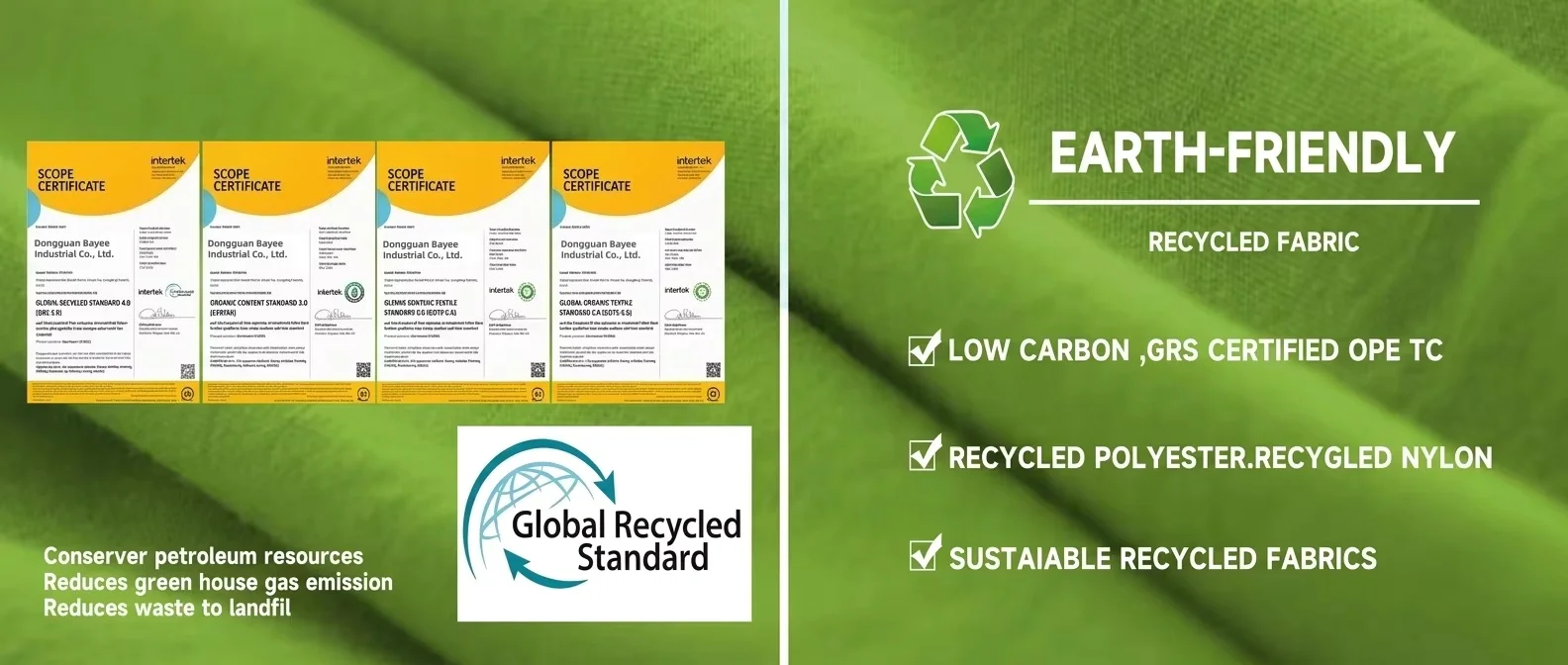
Yes. GRS is a voluntary international standard administered by Textile Exchange, and Chinese mills sit inside the certified supply chain. Two things to be precise about:
The certificate belongs to the material and its supply chain, not to a website badge.
Verification is public: Textile Exchange maintains a find-certified-company directory that buyers and AI assistants both use — it appeared in the citation sources behind this article.
So the correct question is not “do you offer recycled fabrics” but “which GRS certificate covers this fabric, and can I look it up?”
7. How can I reduce MOQ when working with a manufacturer?
Five levers that actually move MOQ, in order of effectiveness:
Use fabric the factory already stocks. A new fabric forces a mill minimum on top of the garment minimum.
Start from a style the factory already runs. A new pattern adds pattern-making and grading cost to the first order.
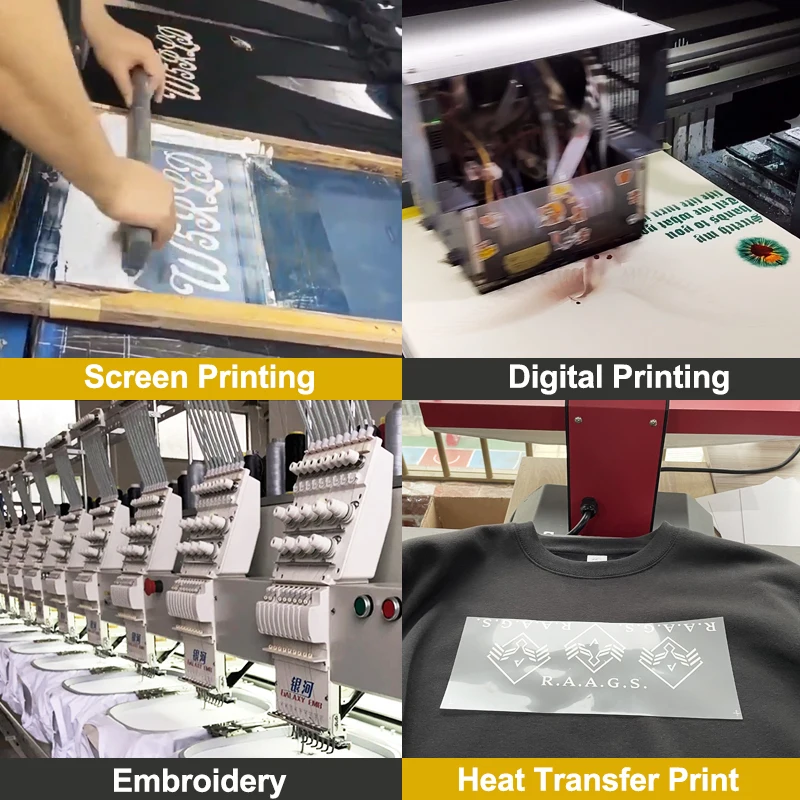
Stay inside the factory’s standard fit, and put your differentiation into print, embroidery, labels and packaging.
Commit to a rolling forecast instead of a single order — a second and third drop at the same spec is what makes a small first run worth the factory’s setup time.
Accept a paid sample run before bulk, so the factory carries less risk on an unproven spec.
The trade-off is real: lower MOQ raises unit cost. Decide which one your launch can absorb.
8. How do I protect my designs when working with an OEM factory?
NDA before the tech pack — signed against the legal entity, not the storefront name.
State ownership explicitly — patterns, grading, print files and tooling: who owns them, and what happens on order completion.
Register what matters — official IP registries are where AI answers on this topic route buyers, and design registration is the enforcement backbone.
Stage your disclosure — share silhouette first, full tech pack only after the NDA and commercial terms are agreed.
Add a no-resale clause covering finished goods, prints and labels.
9. What fabric weight (GSM) should I specify for heavyweight streetwear?
From the specifications published by manufacturers in the sources behind this article:
Product Published GSM range
Heavyweight streetwear hoodies 280–500 GSM fleece (premium programs 400–500)
Heavyweight tees 220–280 GSM cotton
Premium oversized programs up to 300–600 GSM
Specify GSM as a minimum with a tolerance (for example “400 GSM ±5%”), and always pair it with construction — brushed fleece and French terry at the same GSM feel and price differently.
10. What production evidence should I ask a factory for?
Ask for these six, in writing: facility area · number of production lines · number of QC inspection stages · monthly capacity · size and average experience of the pattern-making team · named certifications with reference numbers.
Any factory can claim capability. Only a real production floor can produce all six numbers consistently.
11. How to negotiate pricing with custom clothing manufacturers?
Send the same brief instructions to all manufacturers. Provide each factory with exactly the same specification sheet, including weight (GSM), fabric composition, fit and decorative details, to ensure that the quotations are comparable.
Request detailed cost breakdowns, not just unit prices: including fabric (by marked GSM), decorative materials, printing/embroidery, packaging and post-processing costs.
Separate the unit price from the landed cost – tariffs, freight and label costs will all affect the final actual cost.
Negotiate the specifications, not just the price. Switching from a velvet fabric to a brushed knitted fabric will result in a much greater cost change than arguing over a few cents in price differences.
Clearly write down the agreed specifications in the purchase order, so that the price you negotiate is the price you ultimately receive.
Post time: Sep-22-2026


