The Resurgence of Waffle Knit (Thermal) in Contemporary Menswear & Streetwear
In contemporary menswear, streetwear layering, and luxury loungewear, Waffle Knit (also known as Thermal or Honeycomb Knit) has transitioned from basic military thermal underwear into a premium textural staple. Brands across North America and Europe are utilizing waffle knit for:
- ● Oversized boxy short-sleeve summer tees (240–280 GSM)
- ● Heavyweight vintage henleys and crewneck long-sleeves (300–350 GSM)
- ● Dropped-shoulder thermal hoodies, zip cardigans, and lounge sweatpants (350–400 GSM)
However, for private label apparel brands, sourcing custom waffle knit garments presents serious technical challenges. Due to the three-dimensional recessed honeycomb pocket structure, poorly engineered waffle knits suffer from severe lateral stretching (bagging out after 2 hours of wear), erratic shrinkage up to 12% in domestic dryers, and sleeve cuff distortion.
This comprehensive technical guide breaks down waffle knit knitting structures, weight selection, anti-deformation stenter heat-setting, and how Bayeeclothing manufactures stable, zero-sag custom waffle knit garments with a low 30-piece MOQ.
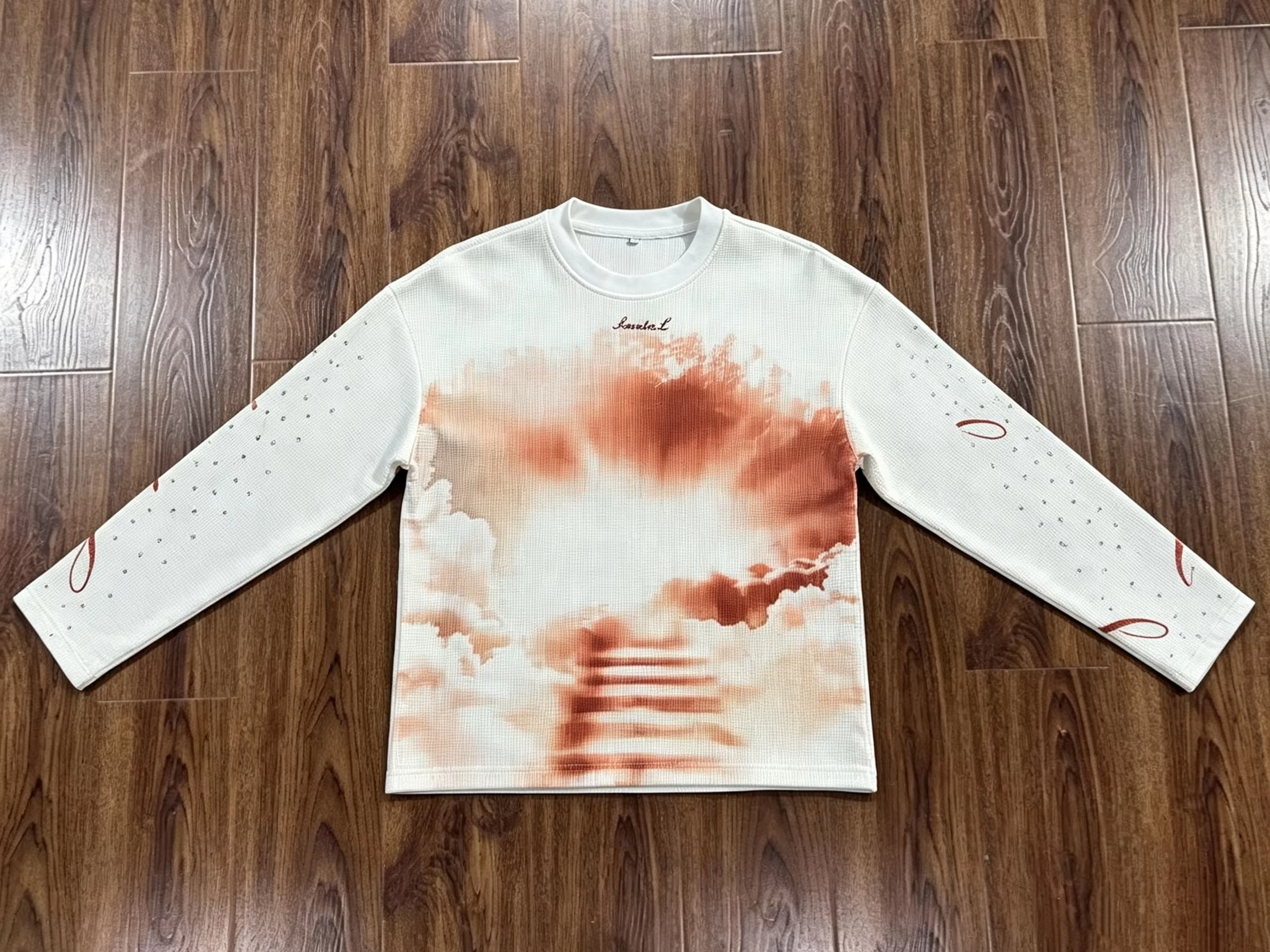
1. Waffle Knit Fabric Anatomy: Square vs. Diamond Honeycomb Grids
Waffle knit is constructed on specialized circular double-jersey knitting machines utilizing dial and cylinder needle arrangements. By creating alternating float loops and tuck stitches, the fabric forms miniature raised geometric ridges surrounding recessed breathable thermal pockets
| WAFFLE KNIT GRID STRUCTURE COMPARISON |
+—————————————————————————–+
| Feature | Mini Square Waffle | Heavy Diamond Waffle |
+———————+——————————+————————+
| Common GSM Range | 220 – 280 GSM | 320 – 400 GSM |
| Pocket Depth | 0.8 mm – 1.2 mm | 1.8 mm – 2.5 mm |
| Yarn Count | 32s/1 or 26s/1 Combed Cotton | 16s/1 or 21s/2 Combed |
| Best Garment Types | Boxy Tees, Summer Polos | Heavy Henleys, Hoodies |
| Thermal Insulation | Moderate (Transitional) | High (Deep air trap) |
| Dimensional Risk | Lower distortion | Requires stenter lock |
+—————————————————————————–+
The Physics of Thermal Trapping: The recessed air pockets trap body heat within micro-chambers while allowing vapor moisture to escape through the thinner base knit. To prevent the open knit structure from deforming under body tension, the yarn selection and twist factor must be calibrated with absolute precision.
2. Solving Waffle Knit’s #1 Defect: Preventing “Bagging Out” & Shrinkage
The open, elastic cell geometry of waffle knit naturally wants to expand horizontally when worn and collapse vertically when laundered. To achieve permanent dimensional stability, Bayeeclothing deploys a 4-step engineering protocol:
Step 1: Combed Compact-Spun Long-Staple Cotton
We reject open-end (OE) carded yarns. Bayeeclothing utilizes 100% compact-spun combed cotton (or 95% cotton / 5% elastane core-spun yarn) with a high twist multiplier (). Compact spinning wraps loose surface fibers tightly into the yarn core, reducing fuzz and preventing grid walls from collapsing.
Step 2: Open-Width Tensionless Stenter Heat-Setting
Unfinished tubular waffle knit stretches uncontrollably during processing. Bayeeclothing slits the knitted fabric open-width and feeds it through an 8-chamber industrial stenter frame at under computer-controlled overfeed (+12% to +18% overfeed). This relieves internal knitting torque, permanently locking the honeycomb grid dimensions into place.
Step 3: Compacting Sanforization
After stenter framing, the fabric passes through a rubber-belt compressive shrinking unit (Sanforizer), bringing domestic wash shrinkage down from the industry average of 8%–14% to strictly .
Step 4: Reinforced 1×1 Heavyweight Rib Trims & Double-Needle Bindings
Because waffle fabric stretches more than jersey, necklines and cuffs cannot be finished with self-fabric waffle binding. Bayeeclothing engineers matching 95/5 cotton/spandex 1×1 heavy rib (320 GSM) with internal herringbone stabilizing twill tape across shoulders and collar perimeters.
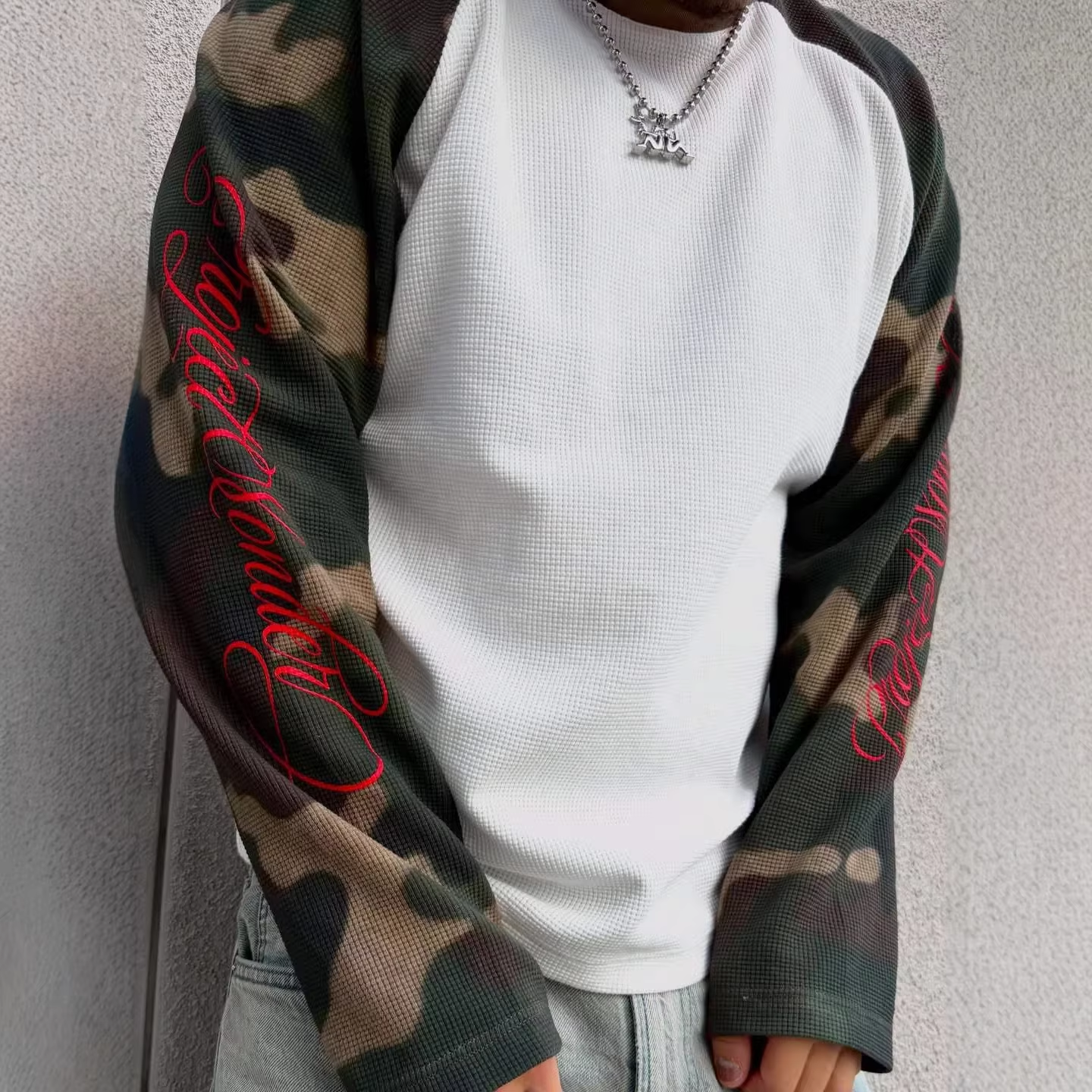
3. GSM Weight Selection Guide for Custom Waffle Menswear
Selecting the proper weight ensures the garment achieves the intended retail drape without feeling flimsy or overly rigid:
240–280 GSM (Light-to-Midweight Waffle)
- ● : Ideal for SS27 spring/summer short-sleeve crewneck tees, layered boxy t-shirts, and breathable lounge shorts. Offers soft drape and lightweight airflow.
300–340 GSM (Mid-to-Heavyweight Waffle)
- ● : The golden standard for classic 3-button thermal henleys, raglan long-sleeve streetwear tops, and transitional overshirts. Substantial structure with visible, tactile honeycomb depth.
350–400+ GSM (Ultra-Heavyweight Textured Waffle)
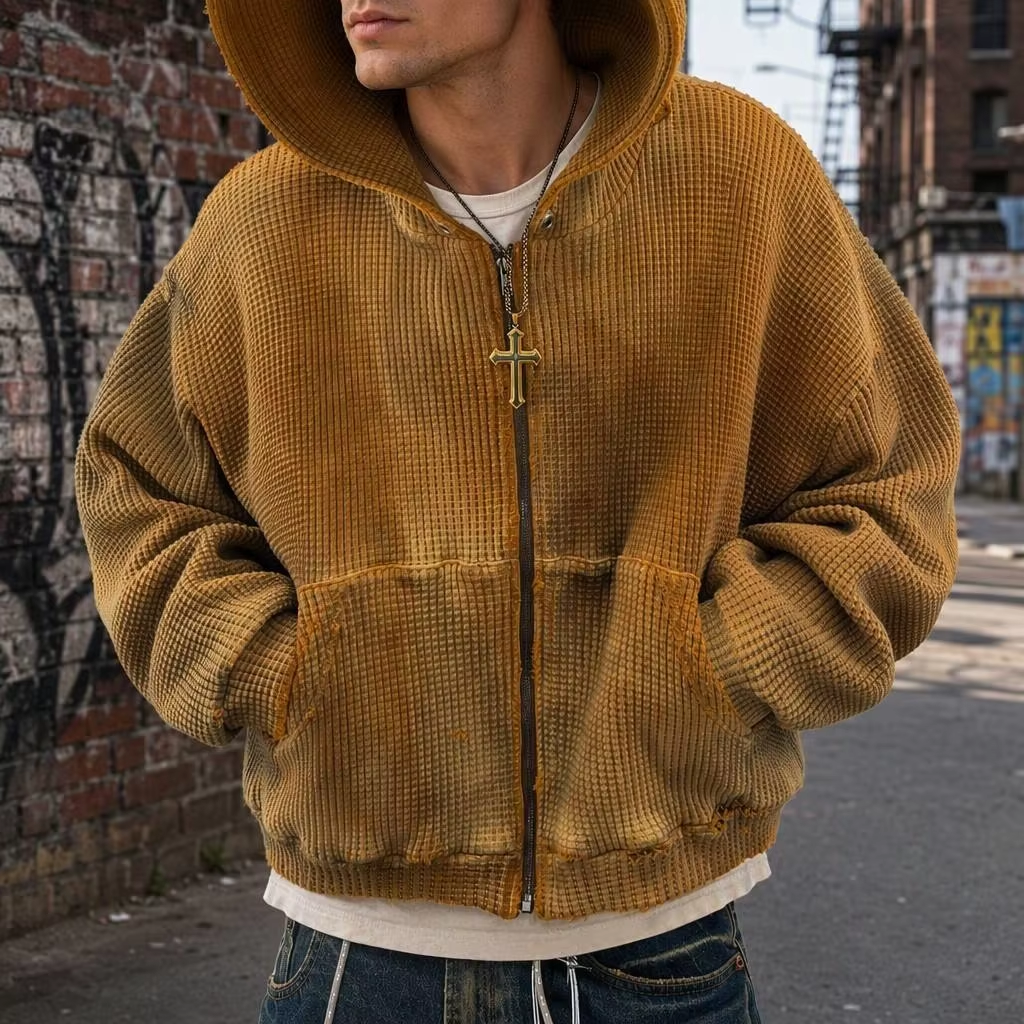
- ● : Engineered for luxury autumn/winter streetwear, dropped-shoulder thermal hoodies, full-zip track jackets, and heavyweight sweatpants. Excellent heat retention and sculptural boxy silhouette.
4. Bayeeclothing Custom Manufacturing Specifications
+—————————————————————————–+
| BAYEECLOTHING WAFFLE KNIT PRODUCTION CAPABILITIES |
+—————————————————————————–+
| Minimum Order Quantity (MOQ) | 30 pieces per design/color (Mixed sizes) |
| Proto-Sampling Turnaround | 3–5 working days (Creditable against bulk) |
| Bulk Production Turnaround | 15–25 working days |
| Size Grading Support | US/EU sizing from S to 5XL (Custom CAD) |
| Compatible Embellishments | High-density embroidery, chenille patches, |
| | distressed acid wash, pigment dye, DTG |
| Factory Infrastructure | 3,000 m2 facility, 7 lines, 3 QC checks |
| Monthly Production Capacity | 60,000+ finished garments |
+—————————————————————————–+
Frequently Asked Questions (FAQ) — Sourcing Custom Waffle Knit Apparel
1. What is the difference between waffle knit and thermal fabric?
Waffle knit and thermal fabric refer to the same category of knitted textiles characterized by a recessed three-dimensional grid or honeycomb pattern. “Thermal” generally describes the functional garment category (such as military or cold-weather base layers), whereas “waffle knit” specifically describes the distinctive square or diamond textured knitting weave. In modern streetwear, waffle knit is utilized as a standalone fashion textile rather than just an undergarment.
2. Why do cheap waffle knit shirts lose their shape and sag at the elbows and hem?
Cheap waffle knit garments lose their shape because they are made from low-grade carded open-end yarns without proper post-knit heat stabilization. The loose cellular weave expands naturally under body heat and friction. When the wearer bends their elbows or sits, the yarn loops stretch permanently without recovery. Bayeeclothing eliminates bagging by using high-twist combed compact cotton, stenter heat-setting, and optional 5% core-spun elastane.
3. What is the recommended fabric weight (GSM) for a streetwear waffle knit long-sleeve?
For contemporary streetwear long-sleeve henleys or crewnecks, we recommend 300 to 340 GSM. This weight provides a substantial, premium hand feel and ensures the waffle grid remains clearly defined and structural, rather than clinging to the body. For winter hoodies or textured cardigans, a heavier 350 to 400 GSM fabric is ideal.
4. How does Bayeeclothing control shrinkage on 100% cotton waffle knit garments?
Because 100% cotton waffle knit has high inherent shrinkage (often 10%–14% in untreated goods), Bayeeclothing utilizes an open-width stenter frame with positive overfeed followed by rubber-belt compressive sanforization. This stabilizes the fiber memory before cutting and sewing, restricting finished garment wash shrinkage to under standard 30°C domestic washing.
5. Can waffle knit shirts be printed or embroidered with custom logos?
Yes. However, because waffle knit has an uneven, textured surface, fine-line screen printing can break across the grid valleys. The most durable and premium embellishment techniques for waffle knit are high-density 3D embroidery, chenille towel patches, felt applique, and direct-to-film (DTF) transfers. For screen printing, bold block graphics with high-opacity plastisol or puff ink yield the cleanest results.
6. What is the minimum order quantity (MOQ) for custom waffle knit garments at Bayeeclothing?
Bayeeclothing offers an industry-leading low MOQ of 30 pieces per design/colorway, allowing full size distribution across S to 5XL. This low threshold enables emerging fashion brands and private labels to test premium textured collections without committing to high factory minimums.
7. What collar construction prevents waffle knit t-shirts from stretching at the neck?
Waffle knit shirts should always feature a collar constructed from heavyweight 1×1 or 2×2 cotton/spandex ribbing (280–320 GSM) rather than self-fabric waffle knit. Bayeeclothing reinforces all collar seams with an internal 10mm herringbone twill back-neck tape and twin-needle topstitching to guarantee the neckline retains its shape over 50+ wash cycles.
8. How long does it take Bayeeclothing to produce custom waffle knit samples and bulk orders?
Custom proto-samples (including custom patterns, dyed-to-match ribbing, and branding trims) are completed within 3 to 5 business days. Once the sample is approved, bulk production takes approximately 15 to 25 business days, supported by our 3,000 m² factory facility and 7 dedicated production lines.
9. Can Bayeeclothing produce vintage acid wash or pigment dyed waffle knit shirts?
Yes. Waffle knit takes vintage washes and garment dyes exceptionally well because the dye pigment naturally concentrates along the raised grid ridges while washing out slightly in the recessed pockets. This creates an accentuated 3D vintage, sun-faded aesthetic. Bayeeclothing offers acid wash, mineral wash, enzyme wash, and pigment garment dyeing.
10. Does Bayeeclothing provide custom private labeling and packaging for waffle knit apparel?
Yes. Bayeeclothing provides complete OEM/ODM full-package manufacturing. We produce custom woven neck labels, satin care tags with international wash symbols, heavy paper hangtags, and custom printed frosted EVA zip lock polybags for retail-ready delivery.
Post time: Oct-14-2026


