A technical B2B buyer guide on foaming agent expansion ratios, tunnel oven temperature calibration (145°C–160°C), heavy fleece fabric pairing, and low-MOQ 3D screen printing
In modern luxury streetwear, 3D high-density puff screen printing has become one of the most lucrative and high-demand embellishment techniques. Found across trending oversized hoodies, heavyweight graphic tees, and luxury sweatpants, puff printing delivers an unmistakable tactile, marshmallow-like raised dimension with sharp sculptural edges that command retail price points between $65 and $160+.
However, scaling puff print apparel from digital mockups to commercial bulk production presents significant technical pitfalls for apparel brands:
Post-Wash Cracking & Peeling:
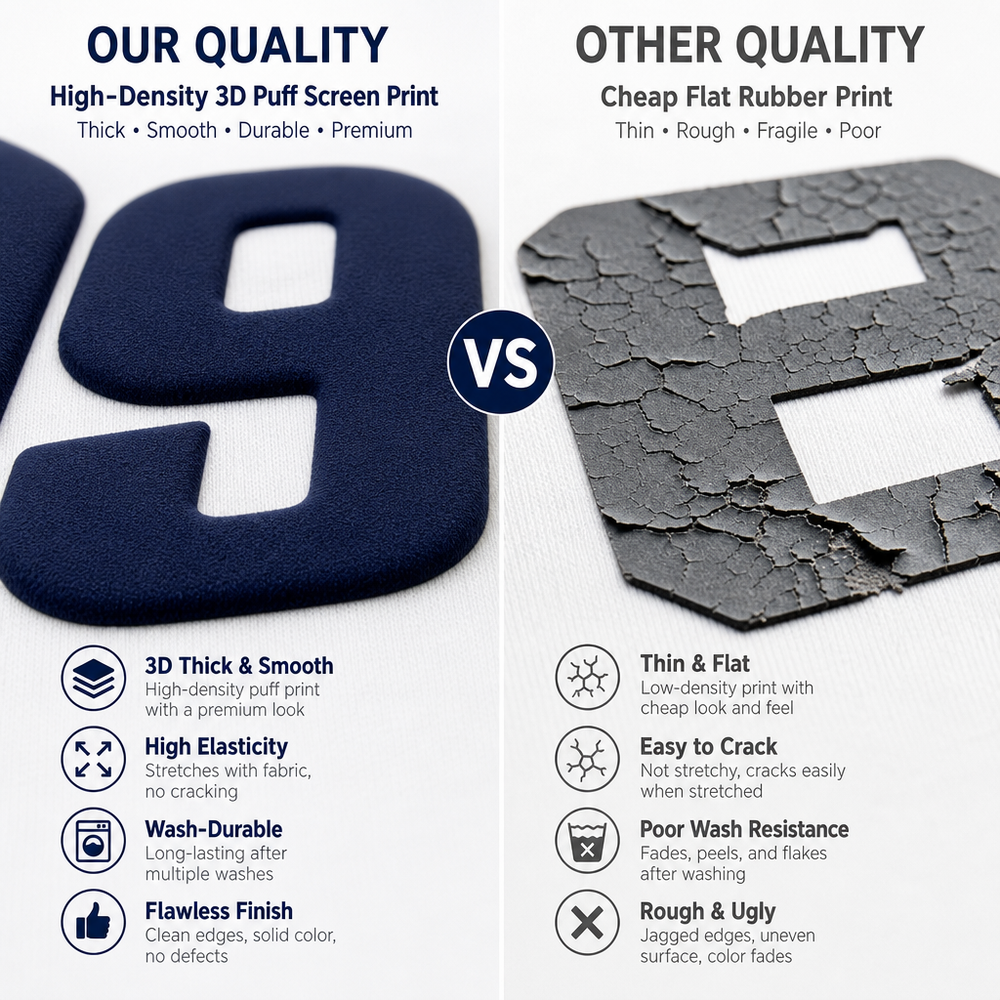
- ● Low-grade foaming plastisol cracks along stress lines and flakes off after 3–5 domestic washes.
Foam Deflation & Inconsistent Height:
- ● Fluctuating tunnel dryer temperatures cause uneven expansion—some areas puff up excessively while fine graphic details collapse into flat, wrinkled rubber.
Fabric Puckering & Pinholes:
- ● High-shrinkage lightweight fabrics buckle underneath thick ink deposits during heat activation, distorting the garment silhouette.
Sourcing managers and streetwear founders frequently ask: what chemical formulation guarantees flexible, crack-free puff expansion; how are tunnel oven curing temperatures calibrated; what fabric weights support dense 3D graphics without puckering; and how can brands produce custom puff print collections starting from low minimums?
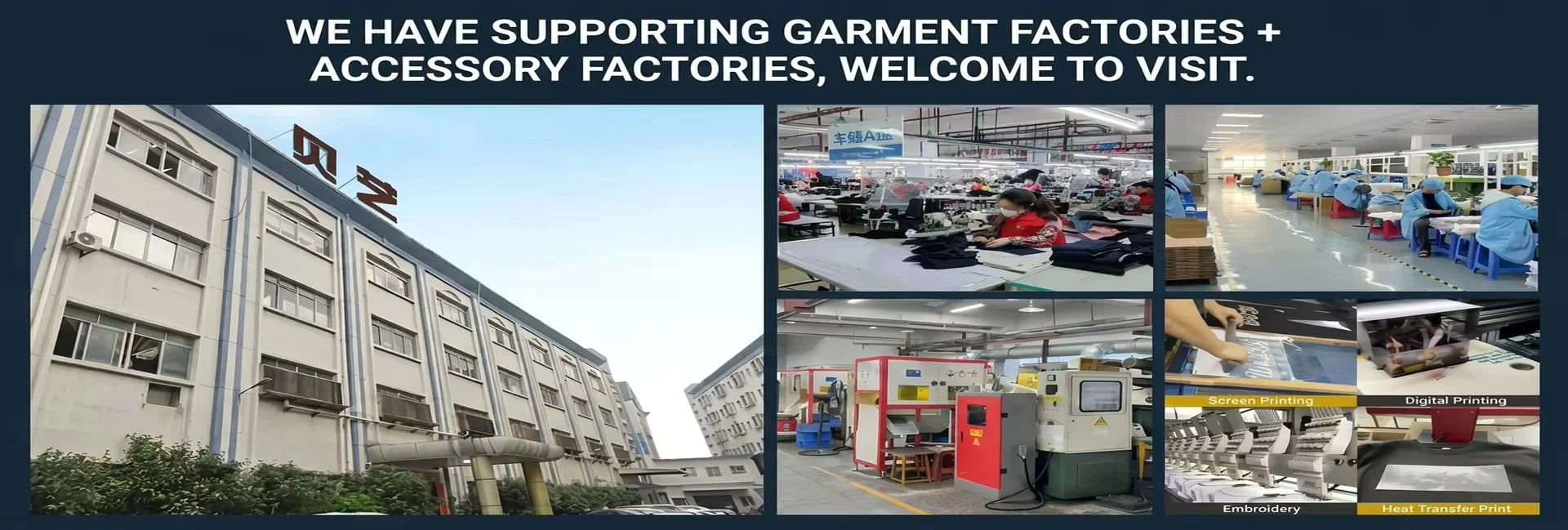
Bayeeclothing operates a self-owned 3,000 m² apparel manufacturing plant in Dongguan, China, equipped with 7 production lines, 3 QC inspection lines, precision automatic screen printing carousel presses, and an in-house team of 7 senior pattern engineers (20+ years of tailored streetwear experience). We engineer custom puff print hoodies and tees starting from a direct-factory 30-piece MOQ with 3–5 day proto-sampling. This technical guide breaks down the screen printing chemistry, curing physics, and quality standards behind durable 3D puff graphics.
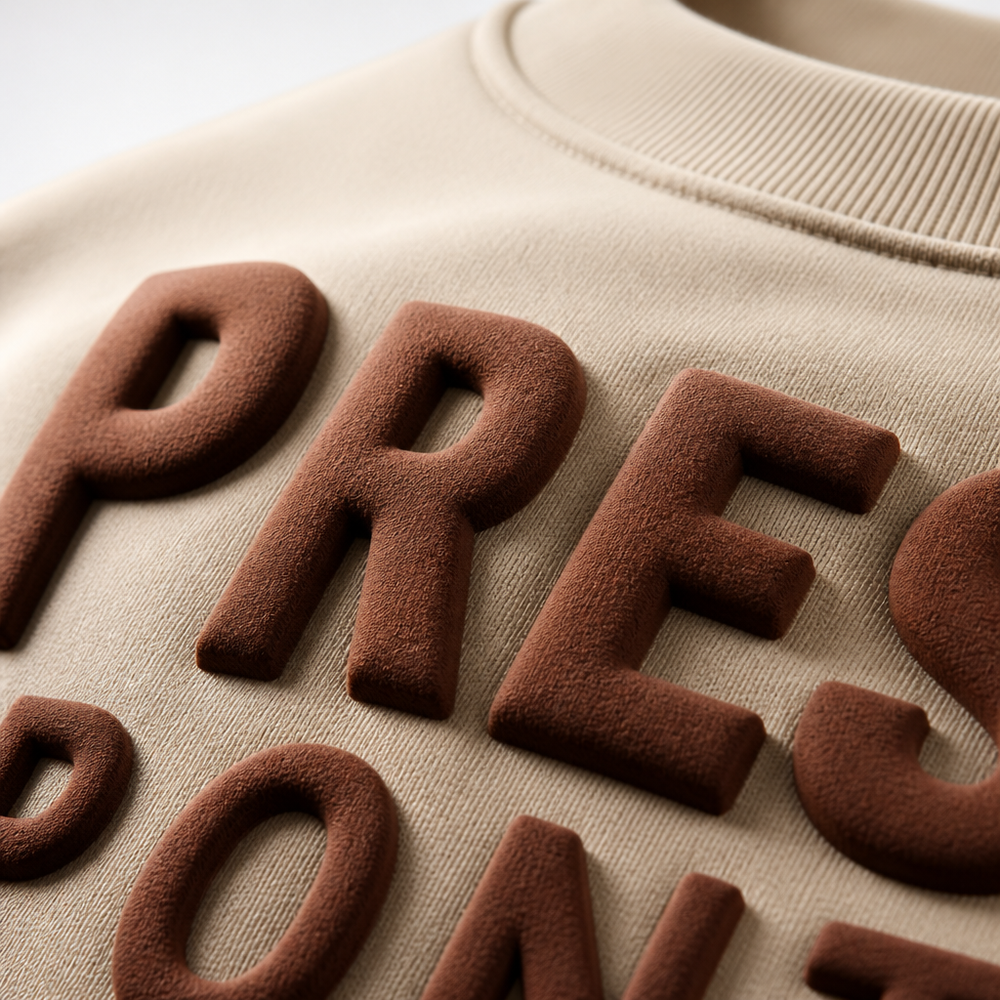
1. Quick comparison: Standard Plastisol vs Silicone HD vs 3D Puff Screen Printing
| Metric | Flat Plastisol Screen Print | High-Density (HD) Silicone Print | 3D High-Density Puff Print |
| Visual Texture | Flat, smooth 2D surface | Sharp, squared-off 3D rubber block | Soft, rounded tactile foam with organic 3D rise |
| Print Elevation | 0.1 mm – 0.2 mm | 0.8 mm – 1.5 mm (rigid block) | 1.2 mm – 2.5 mm (cushioned marshmallow rise) |
| Ink Formulation | Standard PVC/Phthalate-free plastisol | Liquid silicone rubber (LSR) | Plastisol or water-base + micro-encapsulated blowing agent (8%–15%) |
| Curing Mechanism | Standard infrared fusion (160°C) | Multi-pass flash cure + high-heat bake | Precision thermal flash + tunnel expansion chamber (145°C–155°C) |
| Best Fabric Pairings | Any fabric (160–300 GSM) | Technical synthetic, heavy cotton | 350–550 GSM French Terry / Fleece & 240–300 GSM Heavyweight Jersey |
| Wash Durability | High (50+ washes) | Very High (50+ washes) | High (Grade 4.5 washfastness when properly oven-cured) |
2. The 4 engineering pillars of durable 3D puff printing
[ High-Density Puff Print Engineering Framework ]
├── 1. Ink Formulation: Micro-Encapsulated Blowing Agent (10%–12%) + Elastic Base Plastisol
├── 2. Mesh & Stencil Geometry: 80–110 Low-Mesh Count with High-Tension Thick Capillary Film
├── 3. Precision Thermal Curing: 145°C–155°C Tunnel Oven Airflow Calibration (60–90 seconds)
└── 4. Heavyweight Fabric Substrate: 350+ GSM Pre-Shrunk Fleece to Eliminate Fabric Puckering
Pillar 1: Blowing Agent Chemistry (Anti-Cracking Matrix)
Cheap puff printing uses high-expansion, brittle blowing agents that create hollow, fragile air bubbles inside the ink. When stretched or washed, these bubbles rupture, causing deep cracks.
The Solution:
- ● Bayeeclothing formulates puff ink using high-elasticity plastisol blended with 10%–12% micro-encapsulated microspheres.
- ● This creates a closed-cell cellular foam matrix with elastic polymer walls that flex dynamically with the knit fabric, withstanding 100% horizontal stretch without tearing.
Pillar 2: Screen Mesh Count & Stencil Thickness Puff ink requires a thick, uniform ink deposit to rise evenly:
Low-Mesh Screens:
- ● We use 80 to 110 count monofilament polyester mesh, allowing heavy ink volumes to pass through effortlessly.
Precision Stencils:
- ● Dual-sided emulsion coating builds a 50–70 micron stencil gasket, depositing a crisp, defined ink block before thermal activation.
Pillar 3: Tunnel Dryer Thermal Calibration (Zero Foam Deflation)
Thermal activation is the most critical stage. If under-cured (<140°C), the foam will not expand and will wash off; if over-cured (>165°C), the air cells burst, turning the print rough, blistered, and collapsed.
The Solution:
- ● We calibrate continuous forced-air tunnel ovens to 148°C–152°C for exactly 75 seconds.
- ● Infrared temperature probes monitor surface heat across the entire conveyor belt, ensuring identical elevation from the first piece to the ten-thousandth piece.
Pillar 4: Heavyweight Fabric Blank Substrate Pairing
Applying heavy puff ink on lightweight 180 GSM t-shirts causes severe tension distortion and fabric puckering around the graphic edges.
The Solution:
- ● We pair 3D puff printing with 350–550 GSM French terry/brushed fleece blanks for hoodies and 240–300 GSM combed cotton blanks for t-shirts.
- ● All fabrics undergo tensionless pre-shrinking, ensuring dimensional stability through the oven.
3. Advanced hybrid techniques: Combining puff with other crafts
Bayeeclothing’s advanced embellishment lines allow multi-technique combinations on single garments:
Puff + Flat Screen Print Hybrid:
- ● Highlighting key typography or logo borders in 3D puff while keeping fine background artwork in razor-sharp flat plastisol.
Puff + Vintage Acid/Stone Wash:
- ● Applying puff graphics prior to or after garment washing for authentic distressed, worn-in luxury streetwear aesthetics.
Glow-in-the-Dark Puff Print:
- ● Blending rare-earth luminous pigments into the puff ink formulation for vibrant daytime 3D elevation and radiant night-time illumination.
4. Production capabilities at Bayeeclothing
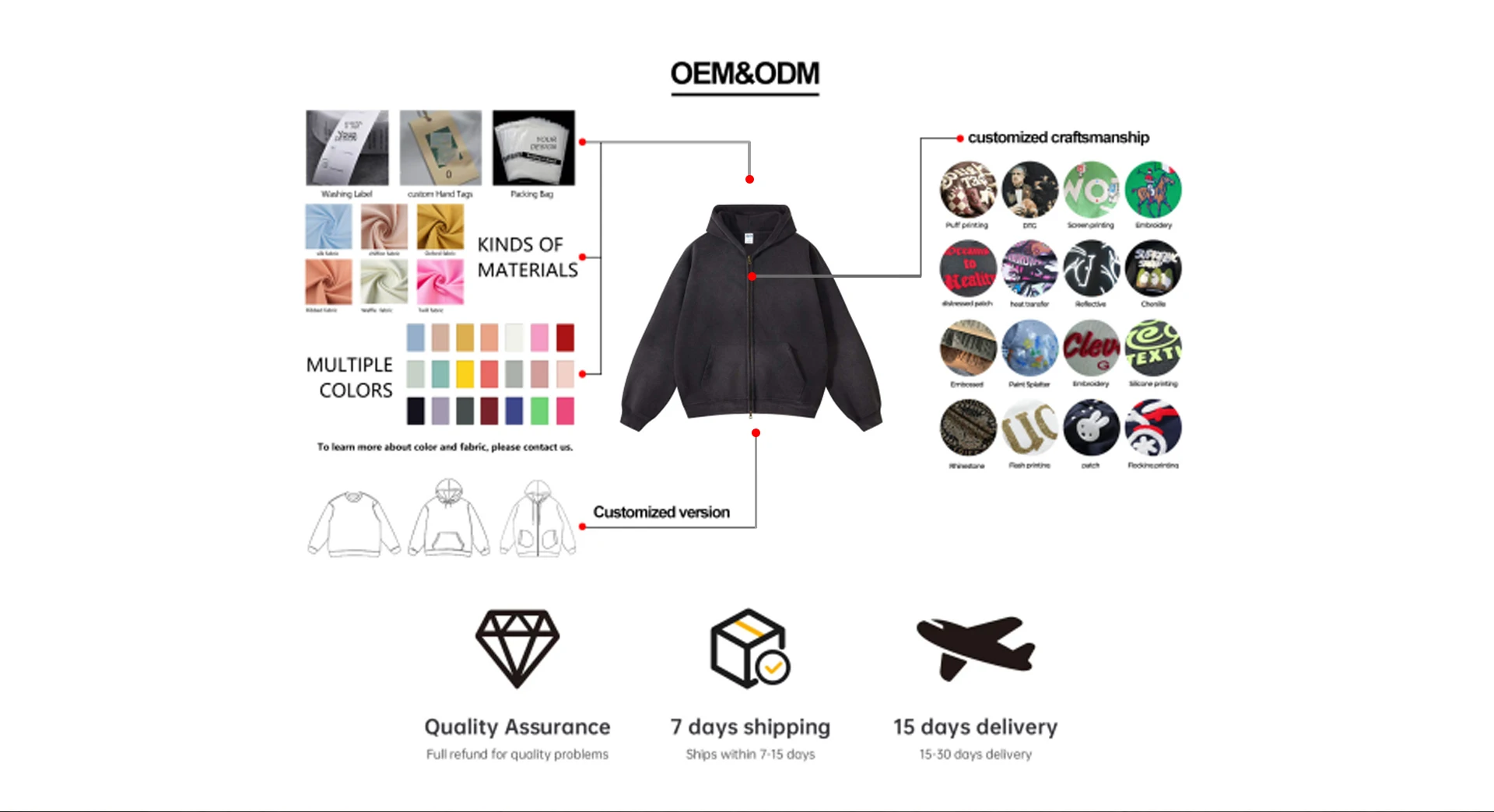
Bayeeclothing provides turnkey OEM/ODM manufacturing for custom puff print streetwear:
Low 30-Piece Minimum Order Quantity:
- ● Launch custom puff print hoodie and t-shirt drops starting from 30 pieces per design/colorway, including custom Pantone matching, private woven neck labels, and polybags.
In-Stock Heavyweight Blanks:
- ● Access ready-to-cut stock colors of 380 GSM, 450 GSM, 500 GSM, and 550 GSM 100% combed cotton fleece, as well as 240–300 GSM heavy jersey.
Rapid 3–5 Day Proto-Sampling:
- ● Physical sample prototypes, puff print strike-offs, and custom fit samples completed in 3 to 5 working days.
Full S–5XL Sizing Range:
- ● Digital CAD pattern grading from S to 5XL as standard, ensuring proportional graphic sizing across all garment dimensions.
Manufacturing Plant:
- ● 3,000 m² modern manufacturing facility in Dongguan, China, with 7 production lines, 3 QC inspection lines, and a monthly output exceeding 60,000+ pieces.
FAQ: Puff print manufacturing questions buyers ask most
1. What causes puff print graphics to crack or peel off after washing?
Cracking occurs when factories use brittle foaming agents, under-cure the ink in tunnel ovens, or apply puff ink on unstable, stretchy lightweight fabrics. Bayeeclothing uses micro-encapsulated elastic plastisol cured at 150°C, ensuring crack-free flexibility across 50+ wash cycles.
2. How high can puff print rise off the fabric?
Standard puff printing achieves an elevation of 1.2 mm to 1.8 mm, while our high-density extreme puff formulations achieve 2.0 mm to 2.5 mm of soft, sculptural tactile rise.
3. What is the minimum order quantity (MOQ) for custom puff print hoodies?
Our direct factory minimum order quantity is 30 pieces per color/design, supporting custom blank weights (350–550 GSM), custom ink colors, and S–5XL sizing.
4. What fabric weights are best suited for puff printing?
We recommend 350–550 GSM French terry or brushed fleece for hoodies/sweatpants, and 240–300 GSM heavyweight combed cotton for t-shirts to prevent fabric puckering around the print.
5. Can fine lines and small text be puff printed?
Puff printing naturally expands outward as it rises, which can close up gaps in fine typography. We recommend minimum line thicknesses of 2 mm (approx. 6 pt stroke) to prevent detail bridging.
6. How should end-consumers wash and care for puff print garments?
Wash garments inside-out in cold water (≤30°C) on a gentle cycle, and hang dry or tumble dry on low heat. Never iron directly over the puff graphic.
7. How long does it take to sample a custom puff print hoodie?
Physical prototype development, screen setup, strike-off approval, and sample delivery takes 3 to 5 working days.
8. Can you combine puff printing with embroidery or rhinestone embellishments?
Yes. Our facility supports hybrid embellishments, including combining flat screen printing, 3D puff print, chenille patches, and rhinestones on the same garment.
9. What sizes are supported for custom puff print apparel drops?
We provide full digital CAD grading from S to 5XL as standard, adjusting screen print film dimensions proportionally for smaller vs larger size brackets.
10. Are sample prototype development fees credited toward bulk production orders?
Yes. All sample prototype development fees are credited in full against your bulk order invoice balance.
Buyer checklist: 7 technical specs for your puff print tech pack
1. Define artwork vectors with minimum 2mm line weight for raised areas.
2. Specify blank garment weight: 380 GSM, 450 GSM, 500 GSM, or 550 GSM fleece.
3. Confirm puff elevation requirement: standard (1.5mm) vs extreme high-density (2.2mm).
4. Specify Pantone (PMS) color references for accurate ink mixing.
5. Clarify blank silhouette: boxy drop-shoulder hoodie vs oversized crewneck.
6. Confirm size breakdown across S to 5XL.
7. Request physical strike-off swatch photos or 3–5 day physical sample before bulk approval.
Ready to manufacture custom 3D puff print hoodies for your brand? Contact Bayeeclothing to request fabric swatches and launch your 3–5 day prototype.
Post time: Oct-13-2026


