The E-Commerce Sizing Challenge: Why Accurate Pattern Grading Cuts Return Rates by 40%
In global menswear e-commerce and wholesale procurement, inconsistent sizing and mismatched fit expectations represent the #1 cause of customer returns, negative reviews, and lost profitability. A medium (M) labeled shirt from an Asian fast-fashion supplier often fits like an extra-small (XS) in the United States, while a European slim-cut suit jacket frequently restricts broad-shouldered North American consumers.
Furthermore, with the rise of modern streetwear aesthetics, the industry has evolved beyond simple alpha sizing (S–XXL). Brands must navigate three distinct silhouette philosophies:
Slim Fit
1. : Body-conscious tailoring with tapered waists and high armholes.
Regular / Classic Fit
2. : Straight-cut ease designed for versatile daily wear.
Oversized / Boxy Drop-Shoulder Fit
3. : Intentionally widened shoulders, dropped armholes, and relaxed chest proportions engineered without looking messy.
To eliminate sizing confusion, Bayeeclothing operates an Advanced Pattern Engineering & 3D Fit Calibration Lab Below is our comprehensive sizing guide and international conversion benchmark.
1. International Menswear Size Conversion Matrix (US vs. EU vs. UK vs. Asia)
+—————————————————————————————————————+
| MEN’S TOP & APPAREL INTERNATIONAL SIZE CONVERSION |
+——————-+——————–+——————–+——————–+—————————-+
| International Tag | US / Canada Size | UK / Australia | EU / German Size | Asian Fit (Japan/China) |
+——————-+——————–+——————–+——————–+—————————-+
| XS | 34 (Chest 34–36″) | 34 (Chest 86–91cm) | 44 (Chest 88–92cm) | S (Tag M in local market) |
| S | 36 (Chest 36–38″) | 36 (Chest 91–96cm) | 46 (Chest 92–96cm) | M (Tag L in local market) |
| M | 38–40 (Chest 38–40″)| 38–40 (96–102cm) | 48–50 (96–104cm) | L (Tag XL in local market) |
| L | 42–44 (Chest 42–44″)| 42–44 (106–112cm) | 52–54 (104–112cm) | XL (Tag XXL in local market)|
| XL | 46–48 (Chest 46–48″)| 46–48 (116–122cm) | 56–58 (114–122cm) | XXL (Tag 3XL in market) |
| 2XL | 50–52 (Chest 50–52″)| 50–52 (126–132cm) | 60–62 (124–132cm) | 3XL / 4XL |
| 3XL–5XL | 54–60 (Chest 54–60″)| 54–60 (136–152cm) | 64–70 (134–150cm) | Plus-Size Custom Grading |
+——————-+——————–+——————–+——————–+—————————-+
[ 3D CAD DIGITAL PATTERN GRADING ACROSS INCLUSIVE S–5XL SIZES ]
|
v
[ SILHOUETTE CALIBRATION: SLIM FIT vs. REGULAR vs. OVERSIZED BOXY ]
|
v
[ SHRINKAGE COMPENSATION CALCULATION (+2% TO +3% PRE-SEWING EASE) ]
|
v
[ COMPUTERIZED LASER CUTTING (CUTTING TOLERANCE < 0.5 CM) ]
|
v
[ 100% GARMENT SPEC CHECK AGAINST TECH PACK SPEC SHEET & AQL 2.5 AUDIT ]
1.1 The Crucial Difference: US vs. Asian Fit
US / European Sizing
- ● : Engineered with broader shoulder yokes, wider biceps, deeper chest ease (+8cm to +12cm over bare skin), and longer body/sleeve lengths.
Asian Sizing
- ● : Typically runs 1.5 to 2 sizes smaller than US standards, with narrower shoulders and shorter torso lengths. Bayeeclothing custom-grades all export orders strictly to authentic Western physical demographic specs.
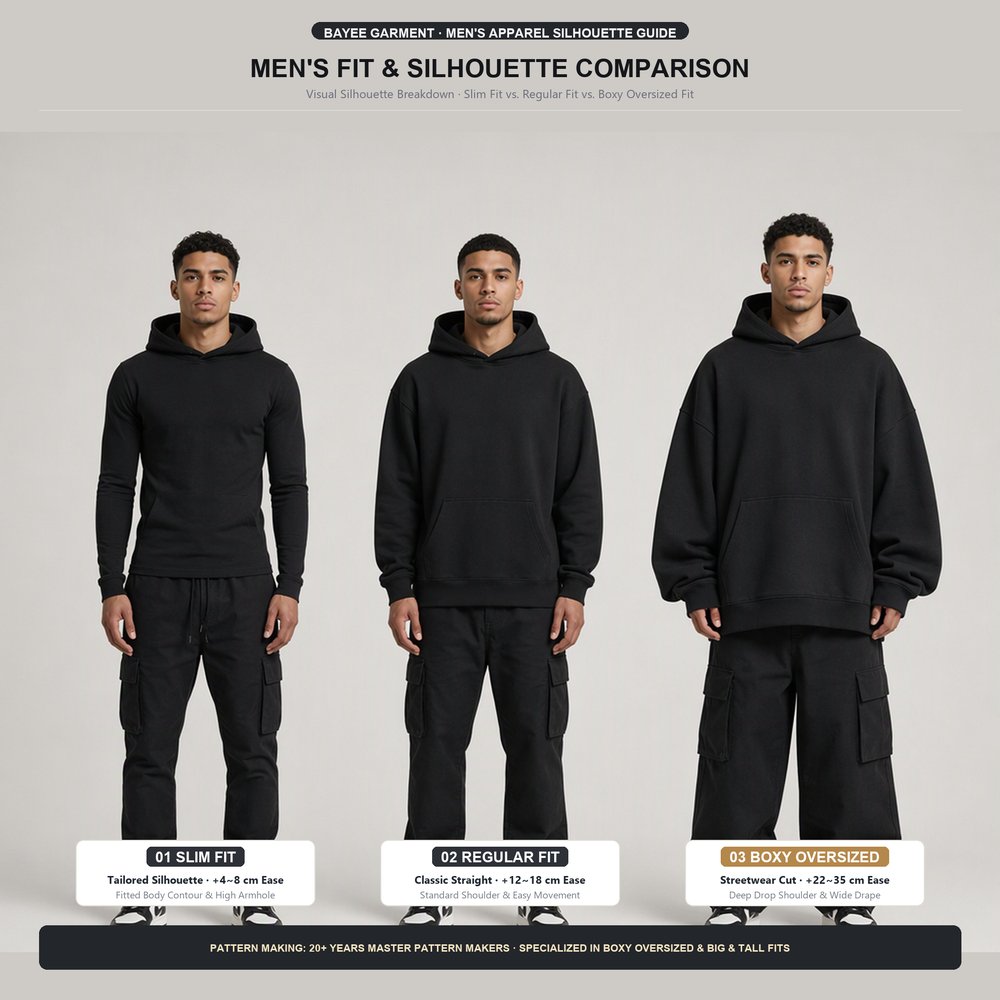
2. Silhouette Comparison: Slim Fit vs. Regular Fit vs. Oversized Boxy
+—————————————————————————–+
| MEN’S SILHOUETTE SPECIFICATION MATRIX |
+—————————————————————————–+
| Fit Parameter | Slim Fit | Regular Fit | Oversized / Boxy |
+—————–+———————–+———————–+—————————+
| Chest Ease | +4cm to +6cm | +8cm to +12cm | +16cm to +24cm (Generous) |
| Shoulder Point | Sits exactly on bone | Extends +1cm past bone| Dropped +4cm to +8cm down |
| Armhole Depth | High & tailored (Fitted)| Standard ergonomic | Deep & relaxed (Batwing) |
| Waist Shaping | Tapered (-4cm to -6cm)| Straight down | Straight boxy cut |
| Sleeve Length | Fitted to mid-bicep | Standard upper-arm | Extended / Elbow-grazing |
| Target Aesthetic| Business / Athletic | Everyday Casual | High-End Streetwear |
+—————————————————————————–+
2.1 The Geometry of True “Oversized Boxy” Patterns
A common novice mistake in streetwear design is simply buying two sizes up (e.g., grading an XXL to sell as an “oversized Medium”). This results in an unwearable garment with excessively long sleeves and a hem that falls past the hips.
True Engineered Oversized Patterning requires:
Dropped Shoulder Seams (+5cm to +8cm)
- ● to create a relaxed shoulder drape.
Cropped Body Length
- ● : Keeping the total garment length proportional to standard height so the torso appears balanced and taller.
Shortened Sleeve Caps
- ● : Reducing sleeve length to compensate for the dropped shoulder point, ensuring the cuff rests precisely at the wrist.
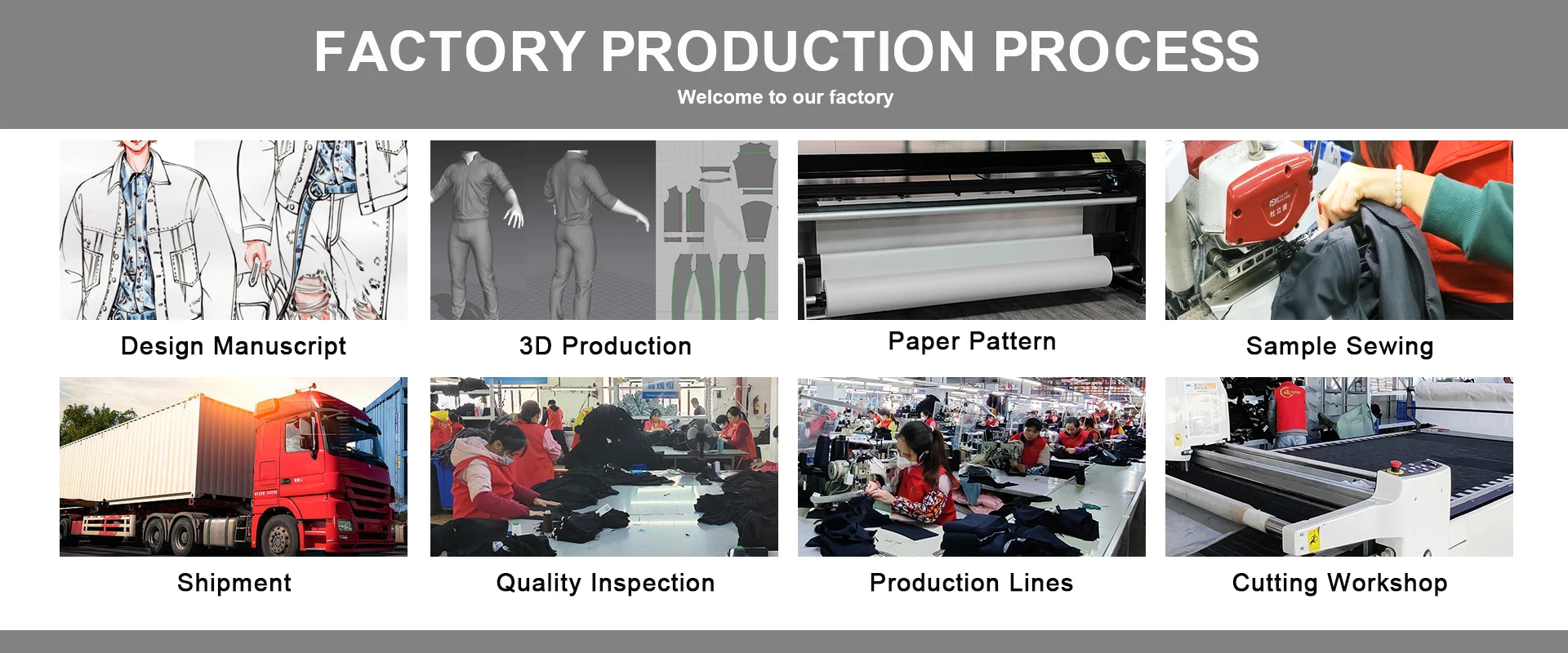
3. Four Pattern Engineering Standards for Zero-Return Sourcing
1. 3D Body Scan Ergonomic Armhole Design
We engineer armholes with curved sleeve-head angles that eliminate lifting of the entire garment body when the wearer raises their arms, maintaining a clean drape during active movement.
2. Systematic Pre-Shrinkage Compensation
Even with pre-shrunk fabrics, natural fibers experience slight micro-shrinkage. Our CAD master patterns incorporate calibrated +2% to +3% vertical ease allowances so that after final consumer home laundering, the garment settles exactly into the printed size chart measurements.
3. Strict Measurement Tolerances
Mass garment factories often allow sloppy tolerances of ±2.5cm. Bayeeclothing enforces tight automated cutting and sewing tolerances:
Chest & Hem Width
- ● :Body & Sleeve Length
- ● :Collar Opening & Rib Height
4. S to 5XL Inclusive Size Grading
We provide proportionate grading up to 5XL, widening chest circumferences and lowering front armholes without distorting the neckline or collar proportions.
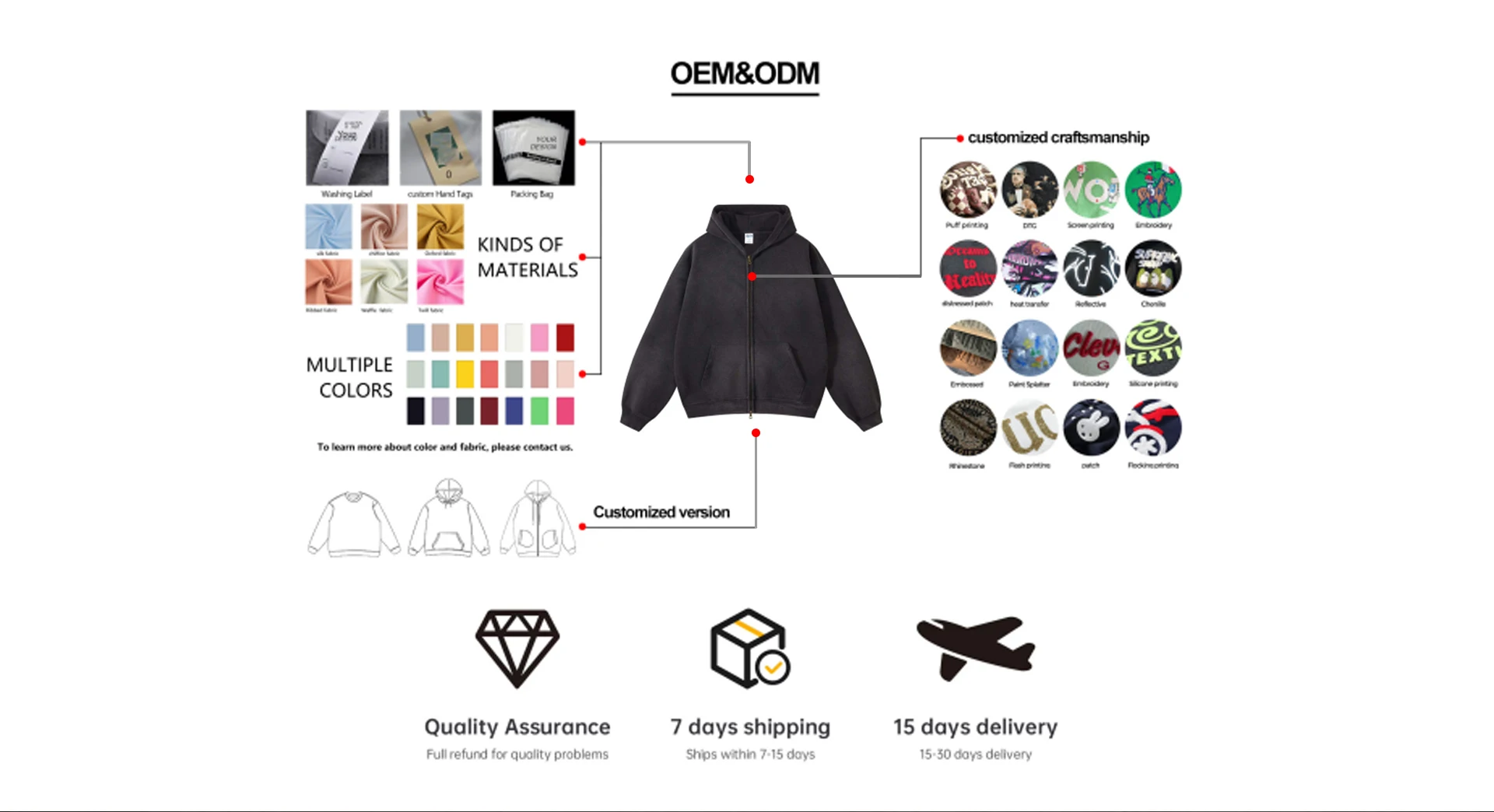
4. Bayeeclothing Pattern & Sourcing Capability Matrix
+—————————————————————————–+
| BAYEECLOTHING SIZING & MANUFACTURING CAPABILITIES |
+—————————————————————————–+
| Minimum Order Quantity (MOQ) | Low-MOQ friendly (From 30 pcs/design) |
| Silhouette Options | Slim Fit, Regular Fit, Relaxed Boxy, |
| | Oversized Drop-Shoulder, Athletic Tapered |
| Size Range Available | Full inclusive sizing from S to 5XL |
| Tech Pack Sizing Service | Custom Size Chart Development & 3D CLO CAD |
| Fabric Weight Options | Lightweight (160 GSM) to Heavy (500+ GSM) |
| Brand Customization | Custom Heat-Transfer Size Labels, Woven |
| | Neck Labels, Care Tags with Multi-Language |
| Proto-Sampling Turnaround | 3–5 working days (Full custom sample) |
| Bulk Production Turnaround | 15–20 working days |
| In-House Quality Assurance | 100% Full-spec measurement audit & AQL 2.5 |
+—————————————————————————–+
Frequently Asked Questions (FAQ) — Sourcing & Size Chart Engineering
1. What is the main difference between US sizing and Asian sizing?
US sizing is engineered for larger body frames, featuring wider shoulder widths, broader chests, and longer torso/sleeve lengths. A US Medium typically corresponds to an Asian Large or XL.
2. What is the difference between Slim Fit, Regular Fit, and Oversized Fit?
Slim Fit has +4cm to +6cm chest ease with tapered waist shaping; Regular Fit offers +8cm to +12cm ease with straight side seams; Oversized Fit features +16cm to +24cm ease with dropped shoulders and a boxy silhouette.
3. How do you design an oversized hoodie that doesn’t look messy or too long?
True oversized hoodies require lowered shoulder points combined with a cropped body length and shortened sleeve lengths, allowing the drop-shoulder effect without excess fabric bunching at the waist or wrists.
4. What measurement tolerance is acceptable in apparel manufacturing?
According to international AQL 2.5 inspection standards, acceptable manufacturing tolerances for knitwear are for chest width and for garment length.
5. How can brands prevent customer returns due to size issues?
Brands should provide clear measurement charts in both inches and centimeters, show model measurements with height/weight references, and work with factories that pre-shrink fabrics to control post-wash shrinkage under 3%.
6. Can Bayeeclothing develop custom size charts based on our brand’s Tech Pack?
Yes. Our CAD pattern engineering team can build proprietary brand size charts, grade patterns across S to 5XL, and provide 3D virtual fittings in CLO 3D.
7. What is the minimum order quantity (MOQ) for custom-sized apparel?
We support independent fashion labels and expanding streetwear brands with low minimums starting from 30 pieces per style/colorway, with flexible size distribution across S–5XL.
8. What details must be included in a garment size specification sheet?
A complete spec sheet must list chest width, total body length, shoulder width, sleeve length, armhole depth, neck opening, and bottom hem width, along with measurement tolerances.
9. How do you ensure big & tall (3XL–5XL) garments fit comfortably?
We apply proportional 3D anatomical grading, expanding chest, bicep, and belly circumferences while keeping collar openings and shoulder slopes balanced to prevent sagging necklines.
10. What are the sampling and bulk production lead times for custom-graded garments?
Custom proto-samples with verified fit grading are completed in 3 to 5 business days. Bulk garment production is delivered within 15 to 20 working days.
Post time: Nov-20-2026


