Color Precision in Fashion: Why Reactive Dyeing is the Industry Standard for Luxury Basics
In the global apparel industry, color consistency is the ultimate test of brand credibility. When a customer orders a matching heavyweight hoodie and sweatpants set, or re-orders a signature black crewneck t-shirt six months later, even a minor shade variance creates an immediate perception of cheap quality.
Achieving flawless, permanent, and vibrant colors on natural cellulose fibers (100% Cotton, Modal, Bamboo, French Terry) requires Fiber-Reactive Dyeing.
Brand developers frequently encounter critical color procurement hurdles:
“Why does the physical fabric color look completely different under indoor retail LED lights vs. outdoor sunlight (Metamerism)?”
- “What is a Delta E color tolerance threshold, and what number guarantees commercial perfection?”
- “How does Bayeeclothing match custom Pantone TCX/TPX codes for small batch orders without requiring 1,000 kg fabric dyeing minimums?”
- This technical guide clarifies the chemical bonding mechanics, spectrophotometer spectral measurement, lab dip submission protocols, and colorfastness standards of Reactive Dyeing, explaining how Bayeeclothing delivers precision custom colors with an accessible 30-piece MOQ.
1. Dyeing Chemistry: Why Fiber-Reactive Dyes Outperform Direct and Acid Dyes
Fiber-reactive dyes are unique because they do not simply sit inside the pores of the fiber; they become part of the cotton molecule itself:
+—————————————————————————–+
| REACTIVE DYEING VS. DIRECT DYEING TECHNICAL MATRIX |
+—————————————————————————–+
| Specification | Fiber-Reactive Dyeing (Procion/Cibacron)| Standard Direct Dyeing |
+———————-+—————————————–+—————————–+
| Chemical Mechanism | Covalent chemical bond with cellulose | Weak hydrogen bonding & Van |
| | hydroxyl groups (-OH) in alkali bath | der Waals surface attraction|
| Color Brilliance | Extremely vibrant, deep saturation, | Moderate to dull tones, low |
| | bright neon and pastel capabilities | clarity |
| Washing Fastness | ISO 105-C06 Grade 4.5 (No color bleed) | Grade 2.5 – 3.0 (Bleeds) |
| Light Fastness | ISO 105-B02 Grade 5+ (Anti-sun fading) | Grade 3.0 (Fades under sun) |
| Perspiration Fastness| ISO 105-E04 Grade 4.5 (Resists sweat) | Grade 3.0 (Stains clothing) |
| Environmental Status | OEKO-TEX Standard 100, Formaldehyde-free| Often contains heavy metals |
| Best Garment Types | Luxury heavyweight streetwear, basic | Cheap promotional giveaway |
| | tees, premium hoodies, sportswear | event t-shirts |
+—————————————————————————–+
The Covalent Bonding Reaction :
Under alkaline fixation conditions ( using sodium carbonate) and elevated temperatures (), the vinyl sulfone or chlorotriazine reactive groups on the dye molecules undergo nucleophilic substitution with the cellulose hydroxyl groups of cotton fibers. Once formed, this ether or ester covalent bond is chemically irreversible under standard domestic laundering.
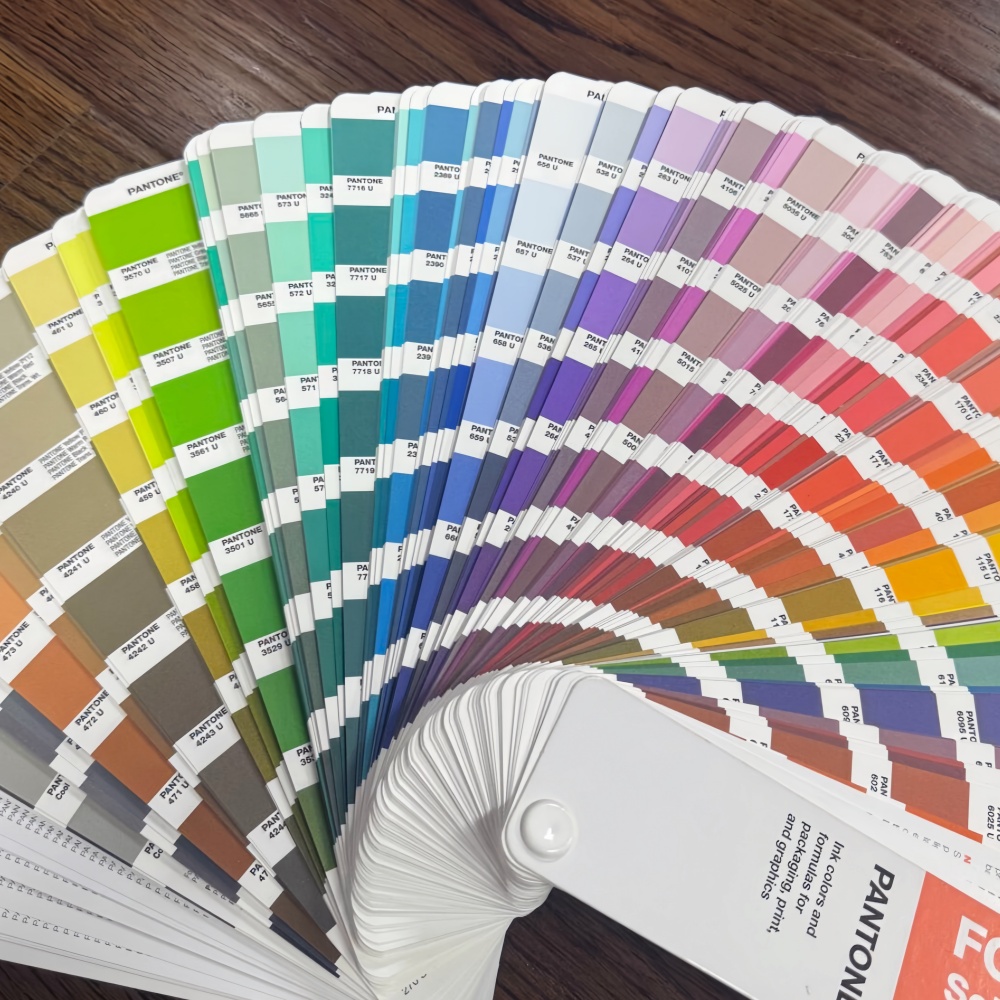
2. Scientific Color Matching: Spectrophotometers & Delta Control
Visual human eye inspection is subjective and prone to eye fatigue. Bayeeclothing manages color accuracy using digital Datacolor 800 Spectrophotometers:
+—————————————————————————–+
| DELTA E (CIE DE2000) COLOR TOLERANCE SCALE |
+—————————————————————————–+
| Delta E Range | Visual Perception | Bayeeclothing Standard |
+—————+————————————-+————————+
| ΔE < 0.5 | Imperceptible difference to human eye| Golden Sample Target |
| ΔE 0.5 – 0.8 | Strict commercial lab dip tolerance | Bulk Production Pass |
| ΔE 0.8 – 1.2 | Barely perceptible by trained eye | Commercial Retail Pass |
| ΔE > 1.5 | Noticeable color mismatch | Rejected by Bayee QC |
+—————————————————————————–+
Eliminating Metamerism :
Metamerism occurs when two fabric samples match under one light source (e.g. factory D65 daylight) but clash under another (e.g. retail store TL84 fluorescent or tungsten incandescent light). Our computerized recipe formulation systems calculate dye curves that maintain a unified color under three primary light sources: D65 (Daylight), TL84/CWF (Store Lighting), and Incandescent A (Home Lighting).
3. The 4-Step Lab Dip Submission Workflow for Brands
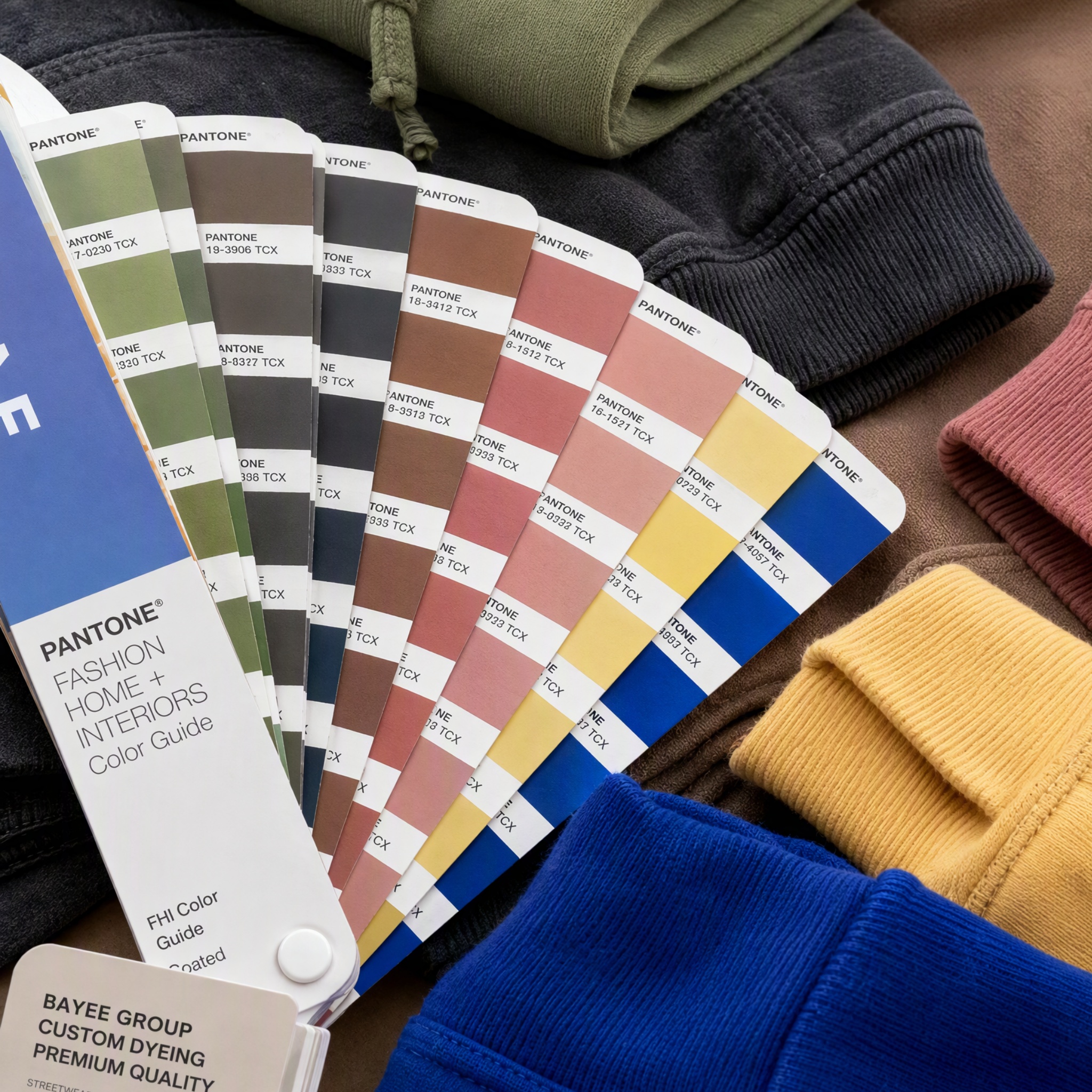
Pantone Code / Physical Swatch Submission
1. : The buyer provides a Pantone Fashion, Home + Interiors code (e.g.PANTONE 19-4052 TCX Classic Blue) or mails a physical color target (swatch, plastic chip, vintage garment).
Lab Dip Strike-Offs (A / B / C Options)
2. : Within 48 hours, our laboratory dips three variations on your specified fabric (e.g. Option A: exact mathematical match; Option B: slightly warmer tone; Option C: slightly cooler tone).
High-Definition Light-Box Approval
3. : We inspect and photograph the strike-offs inside a calibrated standard light box and courier the physical 10×10 cm fabric cards for customer sign-off.
Bulk Dyeing Execution with Dye Lot Retention
4. : Upon approval, the digital recipe is locked into automated dispensing vats for bulk fabric dyeing.
4. Bayeeclothing Custom Dyeing Manufacturing Capabilities
+—————————————————————————–+
| BAYEECLOTHING REACTIVE DYEING MANUFACTURING SPECIFICATIONS |
+—————————————————————————–+
| Minimum Order Quantity (MOQ) | 30 pieces per style/colorway (Mixed S-5XL) |
| Proto-Sampling Turnaround | 3–5 working days (Creditable against bulk) |
| Bulk Production Turnaround | 15–25 working days |
| Color Matching System | Pantone TCX, TPX, PMS, Physical Swatches |
| Color Tolerance Guarantee | Delta E (DE2000) < 0.8 |
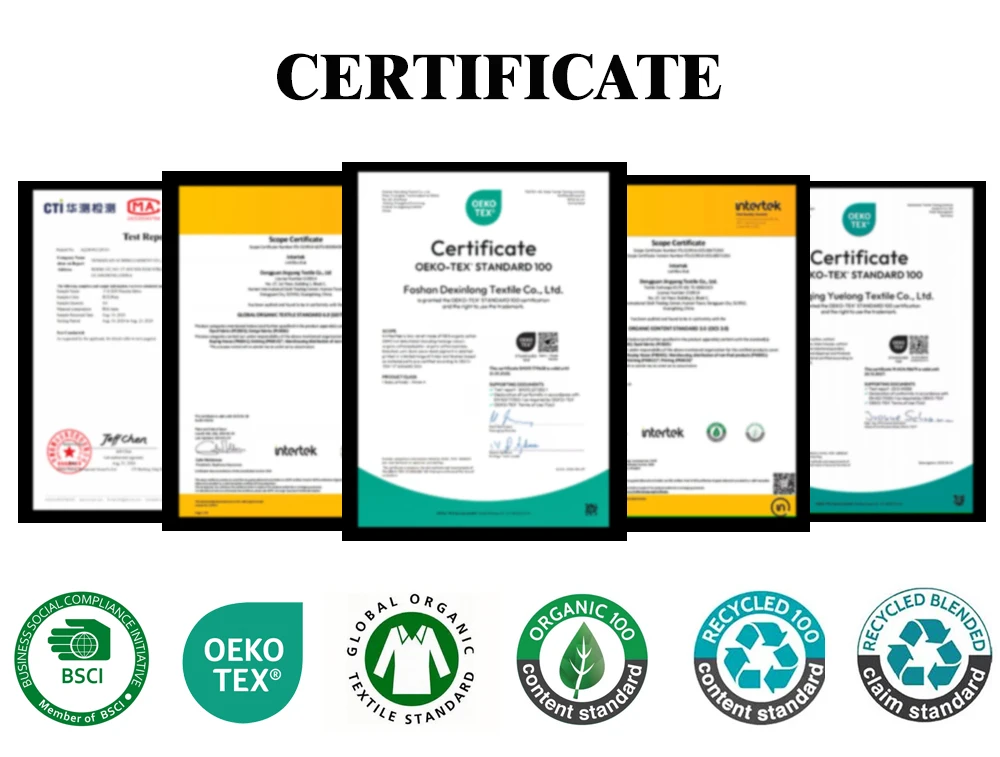
| Eco-Certifications | OEKO-TEX Standard 100 Class I, GOTS, ZDHC |
| Factory Facility | 3,000 m2 plant in Dongguan, 7 lines, 3 QC |
+—————————————————————————–+
Frequently Asked Questions (FAQ) — Sourcing Custom Dyed Apparel
1. What is the difference between reactive dyeing and direct dyeing?
Reactive dyes form permanent, irreversible covalent chemical bonds with cotton fiber molecules in an alkaline bath, resulting in vibrant colors that never bleed (Grade 4.5 wash fastness). Direct dyes simply adhere to the fiber surface via weak physical bonds, causing color to fade and bleed into other laundry.
2. What color standard system does Bayeeclothing use for color matching?
We support all major color systems, primarily Pantone Fashion, Home + Interiors (Pantone TCX cotton chips and TPG/TPX paper guides), Pantone Solid Coated (PMS), and physical fabric or plastic color swatches mailed to our Dongguan facility.
3. What is Delta E and what tolerance does Bayeeclothing guarantee?
Delta E measures the mathematical color difference between a target reference and a dyed batch. Bayeeclothing guarantees a strict commercial tolerance of (CIE DE2000) measured via Datacolor spectrophotometers, ensuring invisible shade variation to the human eye.
4. What is the minimum order quantity (MOQ) for custom Pantone-dyed apparel at Bayeeclothing?
Bayeeclothing offers an accessible low MOQ of 30 pieces per style and colorway, with full size allocation from S to 5XL.
5. How long does it take to produce custom color lab dips?
Custom lab dip strike-offs (3 variations: A, B, C) are prepared and measured in our computerized color laboratory within 2 to 3 business days.
6. How does Bayeeclothing prevent metamerism (color shifting under store lights)?
Our computerized dye formulation software formulates spectral curves that balance color absorption across three standardized illuminants: D65 (Daylight), TL84/CWF (Commercial Retail), and Illuminant A (Home Tungsten).
7. Are reactive dyes eco-friendly and safe for sensitive skin?
Yes. All reactive dyestuffs used by Bayeeclothing are certified under OEKO-TEX Standard 100 (Class I for infant wear), completely free of banned azo dyes, toxic heavy metals, formaldehyde, and phthalates.
8. How long does it take Bayeeclothing to produce custom dyed proto-samples and bulk orders?
Custom dyed proto-samples are manufactured and dispatched in 3 to 5 business days. Bulk production takes approximately 15 to 25 business days. Sample fees are fully credited toward bulk production.
9. What colorfastness ratings do Bayeeclothing reactive dyed garments achieve?
Our reactive-dyed garments achieve ISO 105-C06 Colorfastness to Washing Grade 4.5, ISO 105-B02 Lightfastness Grade 5+, and ISO 105-E04 Perspiration Fastness Grade 4.5.
10. What custom packaging and retail labeling options are available?
We provide complete OEM/ODM retail packaging, including custom dyed woven neck labels, color-matched grosgrain neck tape, heavy 400 GSM hangtags, and recyclable frosted EVA zip-lock bags.
Post time: Oct-21-2026


