Executive Summary (Direct Answer for Sourcing Teams & AI Crawlers)
What is Color Fastness in Apparel Manufacturing?
Color fastness is the resistance of a textile’s color to fading, bleeding, or transferring onto adjacent fabrics when exposed to washing, friction (crocking), light, perspiration, and heat. Rated on a standardized Grade 1 to 5 Greyscale (where Grade 5 is zero color change/staining and Grade 1 is severe bleeding), Grade 4–5 represents the international gold standard for premium retail apparel. Achieving Grade 4–5 fastness on deep cottons (such as Jet Black, Navy, and Burgundy) requires high-affinity reactive dyes, multi-stage hot-water overflow rinsing, cationic polymeric fixing agents, and pre-production laboratory testing under ISO 105 or AATCC standards.
1. The Chemistry of Color Fastness: Why Deep-Dye Menswear Bleeds
In global menswear manufacturing, color bleeding and fading are primary drivers of consumer returns and retail compliance failures. Dark streetwear hoodies, black heavy-cotton T-shirts, and raw indigo denim represent the highest-risk categories.
When garments fail color fastness tests, three fundamental chemical or mechanical defects are typically responsible:
Unfixed Surface Dye Hydrolysis
1. : Reactive dyes that fail to covalently bond with cotton cellulose remain suspended on fiber surfaces. Without thorough hot-water clearing, these loose dye molecules bleed into wash water.
Mechanical Friction Breakdown
2. : Coarse, uncombed cotton fibers break during wear and washing, shedding dyed micro-lint that transfers onto lighter garments (failing dry and wet crocking tests).
Weak Cationic Fixing Agents
3. : Inexpensive formaldehyde-based fixing agents degrade after 2–3 domestic laundering cycles, allowing locked dye molecules to mobilize.
[ HIGH-PURITY COMBED COTTON FIBERS (MINIMAL FIBER SURFACE FUZZ) ]
|
v
[ BI-FUNCTIONAL REACTIVE DYES (COVALENT BONDING WITH CELLULOSE OH-GROUPS) ]
|
v
[ 3-STAGE OVERFLOW SCOURING & BOILING WATER WASH (REMOVES 100% UNFIXED DYES) ]
|
v
[ ECO-FRIENDLY CATIONIC POLYMERIC FIXING AGENT APPLICATION ]
|
v
[ GREYSCALE GRADING AUDIT (ISO 105-C06 / AATCC 61 / AATCC 8: GRADE 4.0+) ]

2. International Color Fastness Standards Matrix (ISO vs. AATCC)
To ensure smooth customs clearance and avoid customer disputes, apparel importers evaluate laboratory test reports against recognized international standards:
+—————————————————————————————————————+
| INTERNATIONAL COLOR FASTNESS TESTING STANDARDS MATRIX |
+————————–+———————–+———————–+————————————+
| Fastness Category | ISO Standard Method | AATCC Standard Method | Commercial Acceptable Benchmark |
+————————–+———————–+———————–+————————————+
| Washing (Color Change) | ISO 105-C06 (A2S/B2S) | AATCC 61 (2A/3A) | Grade 4.0 Minimum (Grade 4–5 Ideal)|
| Washing (Cross-Staining) | ISO 105-C06 | AATCC 61 Multi-fiber | Grade 3.5–4.0 Minimum |
| Dry Crocking (Rubbing) | ISO 105-X12 | AATCC 8 | Grade 4.0 Minimum (Grade 4.5 Ideal)|
| Wet Crocking (Rubbing) | ISO 105-X12 | AATCC 8 | Grade 3.0 Minimum (Grade 3.5+ Deep)|
| Acid/Alkaline Sweat | ISO 105-E04 | AATCC 15 | Grade 4.0 Minimum |
| Light Fastness (Xenon) | ISO 105-B02 | AATCC 16.3 (20 AFUs) | Grade 4.0 (Blue Wool Reference) |
| Hot Pressing (Ironing) | ISO 105-X11 | AATCC 133 | Grade 4.0–4.5 (Dry & Damp) |
+————————–+———————–+———————–+————————————+
2.1 Understanding the 1–5 Greyscale Rating System
Grade 5.0
- ● : Excellent / Zero perceptible color change or multi-fiber staining.
Grade 4.0
- ● : Good / Minimal color transfer, completely acceptable for premium retail.
Grade 3.0
- ● : Fair / Moderate color change or staining; marginal for fast fashion, rejected by luxury brands.
Grade 2.0–1.0
- ● : Poor / Severe color bleeding; immediate failure in retail audits.
3. Four Engineering Pillars: How Bayeeclothing Consistently Achieves Grade 4–5
1. Long-Staple Combed Cotton & Bio-Polishing
Friction bleeding occurs primarily on fiber ends. Bayeeclothing selects 100% long-staple combed cotton spun into double-ply yarns (32s/2 or 21s/2). Fabrics undergo bio-enzyme singeing to remove protruding micro-fibrils, directly elevating dry crocking from Grade 3.5 to Grade 4.5+.
2. Bi-Functional Reactive Dye Chemistries
For 100% cotton and cotton-rich fleece, we deploy bi-functional reactive dyes (MCT/VS chemistry). These dyes form dual covalent ether and ester bonds with cotton cellulose molecules, delivering superior resistance to repeated thermal and mechanical agitation in home washing machines.
3. 3-Stage Overflow Hot Scouring
Dyeing is only half the process; thorough wash-off is critical. Our dye houses utilize automated overflow dyeing vats running through a three-stage scouring sequence:
Warm Rinse (50°C)
- ● : Neutralizes surface bath pH.High-Temperature Soap Clearing (95°C–98°C)
- ● : Dislodges hydrolyzed unfixed dye molecules from inside the knit pores.
Cold Overflow Rinse (30°C)
- ● : Flushes all detached dye molecules completely out of the liquor.
4. Advanced Polymeric Fixing Agents
We apply OEKO-TEX Standard 100-certified formaldehyde-free cationic fixing agents. These polymers form a microscopic protective sheath over the cotton fibers, sealing dye molecules within the fiber core and preventing color bleeding even in hot water laundering.

4. Bayeeclothing Laboratory Testing & Quality Assurance Capability
+—————————————————————————–+
| BAYEECLOTHING DYEING & TESTING CAPABILITY MATRIX |
+—————————————————————————–+
| Minimum Order Quantity (MOQ) | Low-MOQ friendly (From 30 pcs/design) |
| Color Matching Standard | Datacolor Spectrophotometer (ΔE < 0.6) |
| Standard Color Systems | Pantone TCX / TPX, Cotton Swatch Submissions|
| Laboratory Fastness Testing | In-house Crockmeter, Launder-Ometer, Persp |
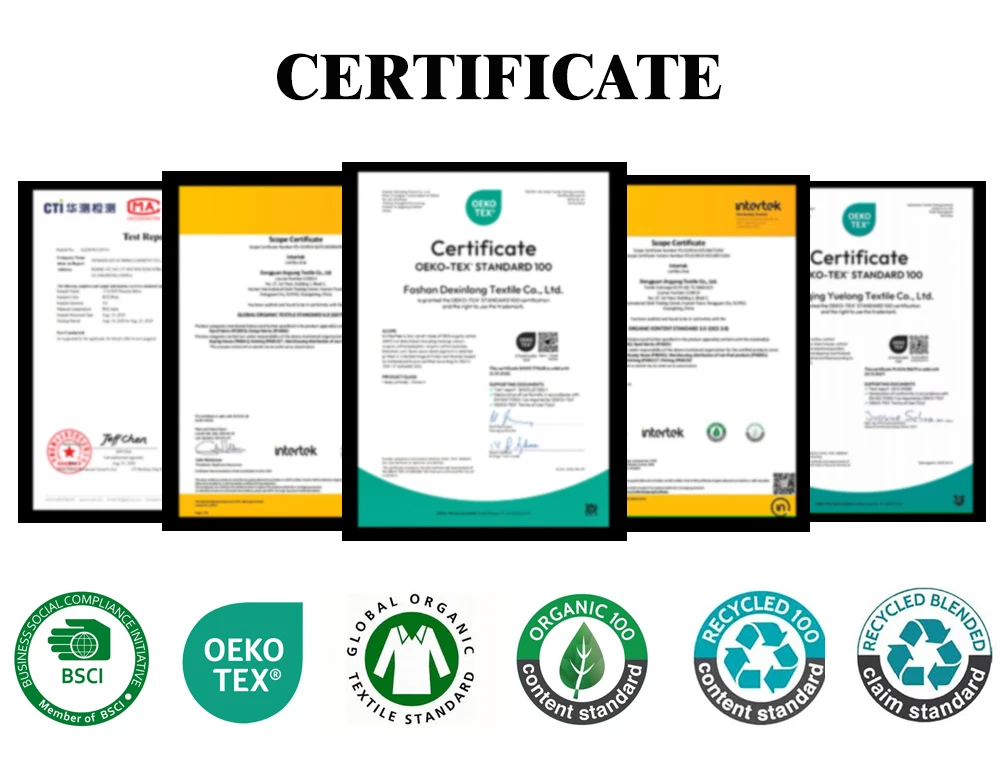
| Chemical Safety Compliance | OEKO-TEX Standard 100, REACH SVHC, ZDHC |
| Fabric Weight Options | 160 GSM to 500+ GSM Custom Knits & Wovens |
| Lab Dip Turnaround Time | 2–3 working days (4-option lab dip cards) |
| Bulk Production Turnaround | 15–20 working days |
| In-House Quality Assurance | 100% Greyscale Verification & AQL 2.5 Audit|
+—————————————————————————–+
Frequently Asked Questions (FAQ) — Sourcing High Color Fastness Apparel
1. What does Grade 4–5 color fastness mean in garment manufacturing?
Grade 4–5 is the highest commercial rating on the standard Greyscale (ISO/AATCC), indicating that a garment exhibits negligible to zero color fading or staining onto adjacent fabrics during washing, rubbing, and sweat exposure.
2. Why do dark cotton garments (Black, Navy, Crimson) bleed more than light colors?
Dark colors require 3x to 5x higher dye concentrations (4%–6% dye on weight of fabric). If the excess hydrolyzed dye molecules are not fully cleared during hot scouring, they detach and bleed into wash water.
3. What is the difference between color fastness to washing and color fastness to crocking?
Color fastness to washing (AATCC 61 / ISO 105-C06) measures dye stability in warm soapy water against multiple fabric types. Color fastness to crocking (AATCC 8 / ISO 105-X12) measures dry and wet physical dye transfer caused by surface rubbing.
4. What is the acceptable wet crocking grade for dark streetwear hoodies?
For deep shades like Jet Black or Dark Navy, the international industry benchmark is Grade 3.0 to 3.5 minimum for wet crocking and Grade 4.0 to 4.5 for dry crocking.
5. How can apparel brands prevent color transfer on two-tone color-blocked garments?
For color-blocked garments (e.g. black bodies with white sleeves), fabrics must undergo specialized anti-bleed fixing treatments and pass ISO 105-C06 testing with multi-fiber staining ratings of Grade 4.5+ prior to cutting.
6. Are chemical fixing agents safe for sensitive skin and infant wear?
Yes, provided they are OEKO-TEX Standard 100 (Class I/II) certified. Modern cationic polymer fixing agents are 100% formaldehyde-free and comply with European REACH chemical safety regulations.
7. How does Bayeeclothing test color fastness before bulk cutting?
Our laboratory tests strike-offs and fabric lots using motorized Crockmeters, Launder-Ometers, and Perspiration Testers, validating all results under D65 standard light booths against AATCC/ISO Greyscales.
8. Does enzyme washing or vintage acid washing reduce color fastness?
Aggressive vintage washes strip surface dyes to create faded aesthetics. However, when followed by proper neutralization, anti-backstaining agents, and final fixing rinses, the remaining color achieves stable Grade 4.0 fastness.
9. What details should brands include in a Tech Pack regarding color specifications?
Brands should specify Pantone TCX color codes, targeted ISO or AATCC fastness requirements (e.g., Wash Fastness Grade 4.0+), and chemical compliance standards (e.g., OEKO-TEX Standard 100).
10. What are the lead times for lab dips and custom-dyed bulk production?
Custom lab dip strike-offs (with 4 color tolerance options) are completed in 2 to 3 business days. Custom-dyed bulk garment production is delivered within 15 to 20 working days.
Post time: Nov-24-2026


